
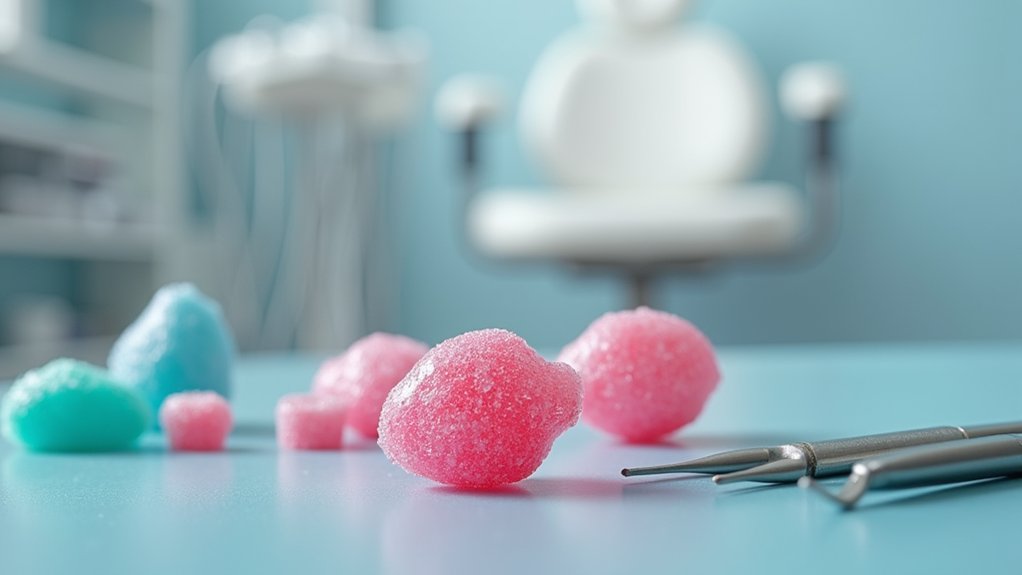
Cough drops can be tough on your teeth because they often contain hidden sugars and acidic ingredients. These sugars feed harmful bacteria, leading to tooth decay, while acidity can erode enamel, increasing cavity risk. Regular use without proper care can worsen dental health. However, there are natural alternatives and tips to protect your teeth. Explore how you can enjoy throat relief while keeping your smile healthy.
Key Takeaways
- Cough drops often contain sugar, which can feed harmful bacteria and lead to tooth decay.
- Ingredients like citric acid in cough drops can erode tooth enamel, increasing cavity risk.
- Extended exposure to sugar and acidity from cough drops creates an unhealthy oral environment.
- Sugar-free options may still harm teeth due to their acidic content.
- Regular brushing or rinsing after using cough drops can help minimize sugar and acid exposure.
Understanding the Ingredients in Cough Drops
When you reach for a cough drop to soothe your throat, it’s important to understand what you’re really consuming.
Many cough drops pack in about 3 to 4 grams of sugar, including high fructose corn syrup, which can lead to tooth decay if used frequently.
Ingredients like citric acid can erode tooth enamel, increasing the risk of cavities.
Even sugar-free options with substitutes like sorbitol may still pose dental risks.
Prolonged exposure to these sugary, acidic drops can create an unhealthy oral environment, ultimately jeopardizing your dental health.
Stay informed to protect your smile while finding relief!
The Hidden Sugar Content of Cough Drops
Though you might grab a cough drop for quick relief, you may not realize how much sugar is hiding in each little piece. With about 3 to 4 grams of sugar per drop, the potential impact on your oral health can be significant, especially with frequent use.
The small size allows the sugar to linger on your teeth, creating a breeding ground for harmful bacteria. Even sugar-free options can pose risks due to their acidic content.
To protect your smile, consider moderation and stay aware of the hidden sugar lurking in those soothing treats. Your teeth will thank you!
How Sugar Affects Dental Health

When you consume cough drops loaded with sugar, you’re not just soothing your throat; you’re also setting the stage for tooth decay.
Each drop can feed harmful bacteria in your mouth, leading to acid production that erodes your enamel.
Understanding how sugar contributes to cavities is essential for maintaining your dental health.
Sugar’s Role in Decay
Although you might enjoy the soothing relief of cough drops, it’s crucial to understand how sugar in these products can jeopardize your dental health.
Cough drops often contain 3 to 4 grams of sugar per drop, providing a feast for oral bacteria. These bacteria produce acids that erode your tooth enamel, increasing the risk of decay. Extended exposure to sugar creates an unhealthy oral environment, leading to cumulative damage over time.
Even sugar-free options can pose risks if consumed excessively. To protect your teeth, brush regularly after using cough drops, ensuring you maintain your dental health and serve others by sharing this knowledge.
Cavity Risk Factors
Cavity risk factors are closely tied to sugar consumption, especially from products like cough drops. Each drop can contain 3 to 4 grams of sugar, which fuels cavity-causing bacteria in your mouth.
When you frequently consume cough drops, you’re exposing your teeth to sugar for extended periods, creating an unhealthy oral environment that accelerates enamel erosion and decay.
Additionally, many cough drops contain acidic ingredients like citric acid, further harming your dental health.
To combat these risks, prioritize consistent oral hygiene practices, including regular brushing and flossing, to protect against cavities and maintain a healthy smile.
The Role of Acidity in Cough Drops
When you reach for a cough drop, it’s vital to take into account its acidic ingredients, like citric acid, which can harm your tooth enamel.
Prolonged exposure to these acids increases your risk of cavities and sensitivity, making it essential to understand how they affect your dental health.
You’ll want to make certain that your saliva has time to neutralize the acidity, protecting your teeth from lasting damage.
Acidic Ingredients Impact Enamel
Cough drops can offer quick relief for sore throats, but you mightn’t realize the hidden danger they pose to your dental health. Many cough drops contain acidic ingredients like citric acid, which can erode tooth enamel over time.
This acidity lowers your mouth’s pH levels, creating an environment that promotes enamel damage and increases the risk of cavities. Even sugar-free options can still harm your teeth. Frequent use may lead to visible erosion and long-term dental issues.
Being aware of these acidic ingredients is essential for maintaining your dental health while seeking relief for that stubborn sore throat.
Prolonged Exposure Risks
Although you might rely on cough drops for relief, prolonged exposure to their acidic components can seriously jeopardize your dental health.
The acidity in many cough drops erodes tooth enamel, increasing your risk of cavities and long-term issues. When you frequently use these products, the pH level in your mouth drops, creating an unhealthy environment for your teeth.
Saliva needs time to restore normal pH levels, delaying the neutralization of harmful acids. Additionally, the combination of sugar and acidity in cough drops magnifies potential dental damage, making mindful usage essential for maintaining your oral health.
Neutralizing Acid Importance
Understanding the importance of neutralizing the acid from cough drops is essential for protecting your teeth. Cough drops often contain citric acid, which can erode enamel and lead to cavities.
Prolonged exposure lowers your mouth’s pH, creating an acidic environment that’s harmful to dental health. While saliva helps in neutralizing acidity, it needs time to restore normal pH levels after using these drops.
Frequent use can result in cumulative damage, so it’s important to stay hydrated and maintain good oral hygiene. By doing so, you can support saliva production and safeguard your smile against the effects of acidity.
Alternatives to Cough Drops for Throat Relief
When you’re seeking relief for a sore throat, there are several effective alternatives to traditional cough drops that can soothe your discomfort without compromising your dental health.
Natural remedies like honey provide soothing properties, while warm herbal tea hydrates and promotes saliva production for a healthy smile.
Exploring herbal options such as chamomile or licorice root can also deliver relief, free from harmful sugars.
Additionally, gargling with warm salt water alleviates pain and reduces inflammation.
Don’t hesitate to consult with a dental professional for personalized alternatives that prioritize both your comfort and oral health.
Your throat and teeth will thank you!
Dental Care Tips for Cough Drop Users

If you rely on cough drops for throat relief, it’s essential to take steps to protect your dental health.
Start by opting for sugar-free cough drops whenever possible; they greatly lower your risk of cavities.
Opt for sugar-free cough drops to significantly reduce your risk of cavities and protect your dental health.
After using cough drops, make it a habit to brush your teeth or rinse your mouth with water to minimize sugar and acid exposure.
Limit your use to reduce cumulative sugar intake, and stay hydrated to promote saliva production, which helps neutralize harmful acids.
The Importance of Regular Dental Check-Ups
Regular dental check-ups are essential for maintaining your oral health, especially if you frequently rely on cough drops.
These visits help you:
- Identify early signs of dental issues before they worsen
- Remove plaque and tartar buildup that cough drops can exacerbate
- Receive personalized recommendations for managing the effects of sugar and acidity
- Guarantee effective oral hygiene practices to protect your teeth
Patient Experiences and Feedback on Dental Health
While steering your dental health journey, you might find that patient experiences and feedback play an essential role in shaping your perceptions of dental care.
Many individuals share how a friendly, calming office environment makes their visits more comfortable. You’ll appreciate the staff’s helpfulness and accommodating nature, ensuring your needs are met.
Testimonials often highlight that dentists prioritize your comfort and deliver thorough care, leading to effective treatments and improved dental health outcomes.


