
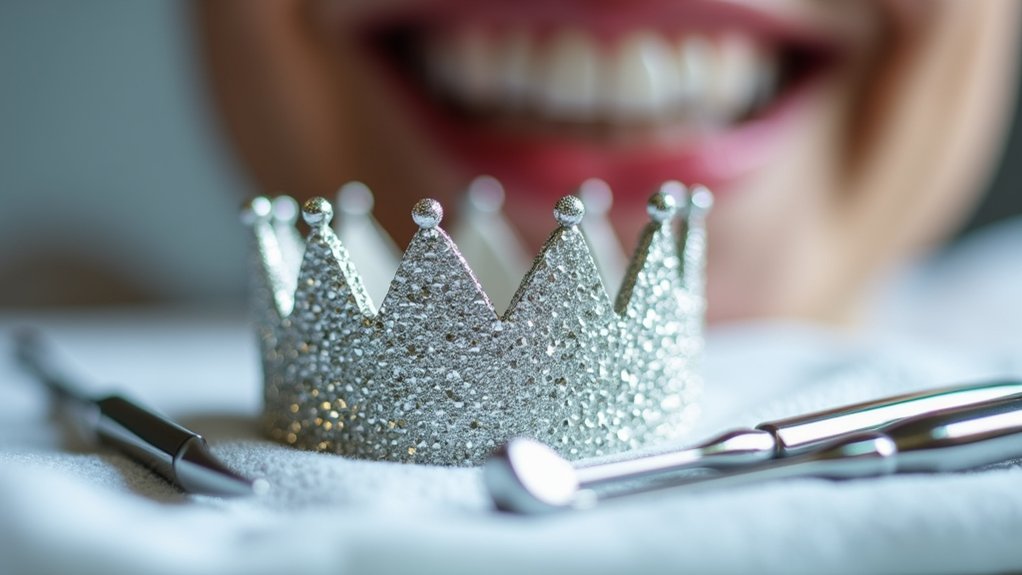
Crowns aren’t bad for your teeth when applied properly; they actually protect and strengthen damaged teeth. A skilled dentist guarantees a good fit, reducing sensitivity and discomfort. However, if not cared for, crowns can lead to potential health concerns like decay or gum irritation. Good oral hygiene and regular check-ups are essential for maintaining crown longevity. Understanding the benefits and potential risks will help you make informed decisions about your dental health. More insights await you.
Key Takeaways
- Properly fitted crowns protect teeth from further decay and trauma, enhancing overall dental health.
- Improperly applied crowns can cause increased sensitivity, discomfort, and gum irritation.
- Quality crowns can last 5 to 15 years, offering a durable solution for damaged teeth.
- Good oral hygiene is essential to prevent decay under crowns and maintain their effectiveness.
- Material choice impacts crown durability; all-metal crowns generally last longer than aesthetic porcelain options.
The Importance of Proper Application
When it comes to dental crowns, the importance of proper application can’t be overstated. A well-fitted crown considerably enhances your dental health by minimizing long-term sensitivity and discomfort.
Choosing a reputable dentist guarantees that you receive the best dental procedure, utilizing leading technology for peak results. Proper application also prevents bacteria from forming beneath the crown, avoiding serious complications.
An improperly applied crown can lead to immediate issues, like heightened sensitivity and increased pain. Regular follow-up appointments are essential to monitor the crown’s condition, allowing you to address any concerns promptly and maintain your overall oral health.
Risks Associated With Dental Crowns
When considering dental crowns, it’s important to be aware of potential risks like sensitivity and discomfort.
If a crown isn’t properly fitted, you might experience increased sensitivity to temperature changes.
Additionally, neglecting oral hygiene can lead to decay under the crown, compromising its effectiveness and your overall dental health.
Sensitivity and Discomfort
Although dental crowns can effectively restore damaged teeth, they can also lead to sensitivity and discomfort for some patients. After placement, you might notice increased sensitivity to hot or cold foods, which can persist due to alterations in tooth structure.
Additionally, improperly fitted crowns may cause pain or gum irritation, necessitating adjustments. Some individuals may even experience allergic reactions to crown materials, resulting in discomfort.
Over time, crowns can loosen, exposing the natural tooth and heightening sensitivity. To mitigate these risks, ensuring proper care and regular dental check-ups is essential for maintaining comfort and functionality.
Potential for Decay
Sensitivity and discomfort aren’t the only concerns associated with dental crowns; the potential for decay is another significant risk.
Here are three factors to evaluate:
- Bacterial Invasion: Poorly fitted crowns can let bacteria infiltrate, increasing decay risk.
- Weakened Tooth Structure: The remaining tooth under a crown is often less robust, making it more vulnerable to decay.
- Neglected Dental Hygiene: Inadequate care can lead to plaque buildup, particularly at crown margins, promoting decay.
Regular dental check-ups are essential to monitor crown condition and maintain your overall dental hygiene, safeguarding against decay-related complications.
Benefits of Dental Crowns
Dental crowns offer significant advantages for your oral health.
They protect and strengthen damaged teeth while enhancing their appearance, giving you a natural look that boosts your confidence.
With a lifespan of 5 to 15 years, crowns provide a durable and cost-effective solution for tooth restoration.
Tooth Protection and Strength
When a tooth is damaged or weakened, dental crowns serve as an essential solution to protect and strengthen it. They act as protective caps, ensuring longevity and functionality of compromised teeth.
Here’s how crowns benefit your dental health:
- Enhanced Protection: Dental crowns shield damaged teeth from further decay and trauma.
- Increased Tooth Strength: By covering the remaining tooth structure, they restore normal chewing ability and prevent fractures.
- Preservation of Healthy Structure: Crowns require minimal removal of healthy tooth material, maintaining overall tooth strength.
With proper care, dental crowns can last 5 to 15 years, making them a reliable choice for protecting your teeth.
Improved Aesthetic Appearance
While many people focus on the functional benefits of dental crowns, their ability to improve aesthetic appearance is equally important. Dental crowns, especially porcelain crowns, enhance your smile by providing a uniform shape and color that blends seamlessly with your natural teeth. They can restore confidence and improve overall symmetry by addressing irregularities. Here’s a visual representation of the key benefits:
| Benefit | Description | Type of Crown |
|---|---|---|
| Aesthetic Enhancement | Blends with natural teeth | Porcelain crowns |
| Confidence Boost | Restores self-esteem and smile | All types |
| Symmetry Improvement | Corrects irregular tooth shapes | Porcelain crowns |
| Color Matching | Customized to match adjacent teeth | Porcelain crowns |
| Damage Protection | Shields compromised teeth from harm | All types |
Longevity and Durability
Crowns offer remarkable longevity and durability, making them a reliable choice for restoring damaged teeth.
With proper care, dental crowns can last between 5 to 15 years, greatly enhancing your oral health.
Here are three key benefits:
- Strength: Crafted from advanced materials like porcelain and zirconia, crowns withstand substantial chewing forces.
- Protection: They act as protective caps, reducing the risk of future decay and damage to your underlying tooth structure.
- Longevity: Properly maintained crowns help preserve the longevity of remaining tooth structure, preventing further complications.
Choosing dental crowns guarantees you’re investing in both durability and your long-term oral health.
Potential Health Concerns
Though dental crowns are a common solution for restoring damaged teeth, they can present potential health concerns that patients should be aware of.
You might experience increased tooth sensitivity, especially to hot or cold, after the procedure, though this usually resolves. Allergic reactions to metals used in crowns, like nickel, can occur, causing discomfort.
If crowns aren’t properly fitted, they may irritate your gums, leading to further dental problems. Neglecting oral hygiene post-placement can increase the risk of decay for both the crown and the underlying tooth.
Regular check-ups are essential to monitor your crowns and maintain ideal oral health.
Long-Term Care for Dental Crowns
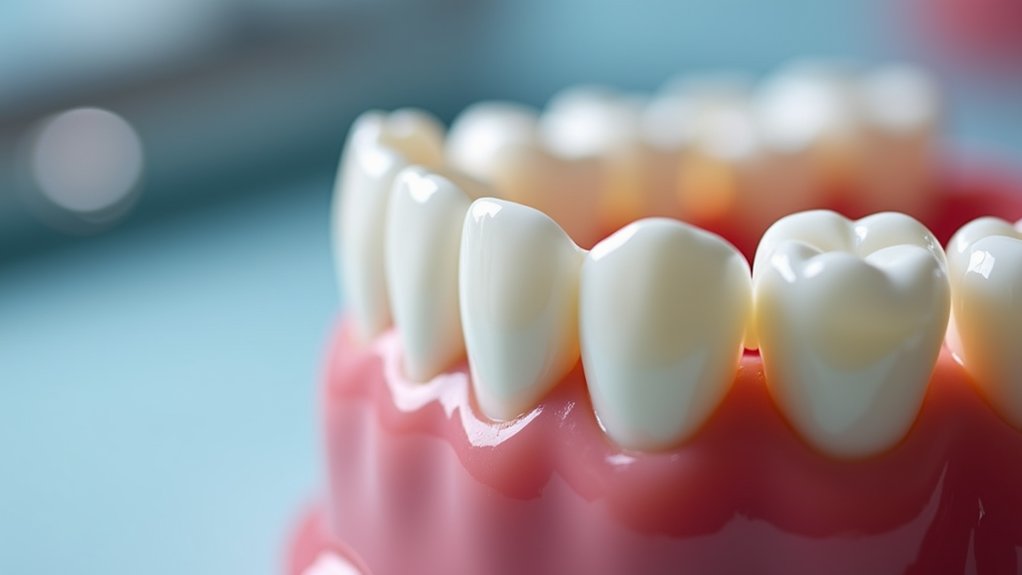
Maintaining the longevity of your dental crowns requires consistent care and attention.
To guarantee your crowns remain in prime condition, follow these guidelines:
- Practice good oral hygiene: Brush twice daily and floss regularly to prevent decay around the crowns.
- Schedule regular dental check-ups: These visits allow your dentist to monitor the condition of your crowns and address any issues before they escalate.
- Avoid hard or sticky foods: These can cause damage to the tooth or loosen the crown, potentially leading to complications.
Understanding Different Types of Dental Crowns
When it comes to dental crowns, understanding the different types available can greatly impact your treatment decisions.
You’ll find various types of dental crowns made from materials used like porcelain, metal alloys, or a combination.
CEREC crowns can be placed the same day, while traditional porcelain crowns require lab fabrication.
All-metal crowns offer durability, making them ideal for back teeth, whereas porcelain crowns provide a natural look for front teeth.
All-metal crowns are perfect for durability in back teeth, while porcelain crowns ensure a natural appearance for front teeth.
Porcelain on metal crowns balance aesthetics and function but may show dark lines at the gum line.
Consulting your dentist will help determine the best option for your needs during the process of getting a crown.
Factors Influencing Crown Longevity
Choosing the right type of dental crown is just the first step; understanding the factors that influence its longevity is equally important.
Here are three key factors to take into account:
- Materials: Crowns made from durable materials, like all-metal, generally last longer than aesthetic options like porcelain, which can chip or crack.
- Oral Hygiene: Maintaining excellent oral hygiene, including regular brushing and flossing, helps prevent decay around crowns, extending their lifespan.
- Placement Technique: The quality of the bond between the crown and tooth affects durability; a well-placed crown withstands daily wear and tear better, promoting longevity.
When to Consult Your Dentist
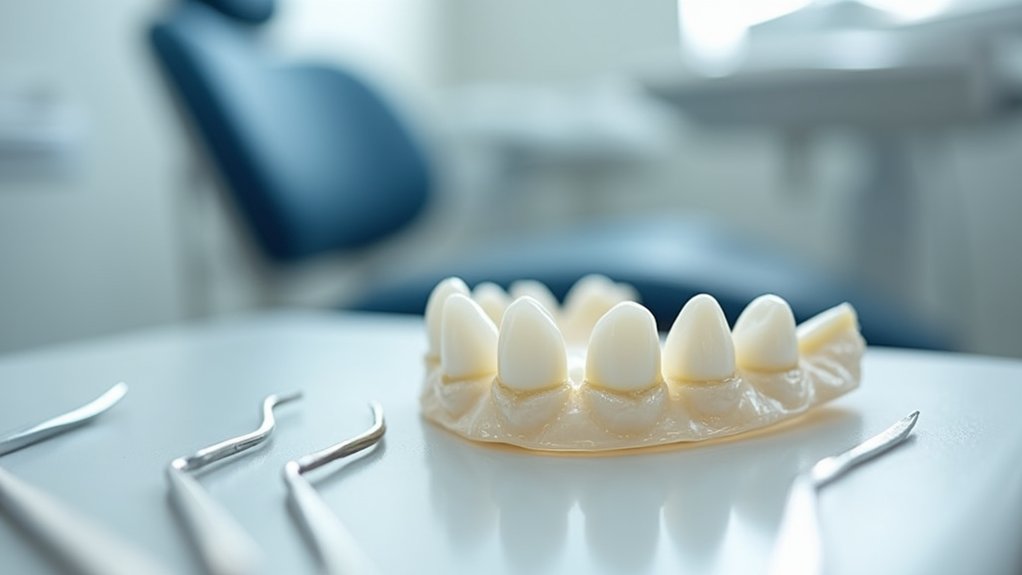
Have you noticed any unusual sensitivity or discomfort after getting a crown? If you experience persistent sensitivity to hot or cold, it’s crucial to consult your dental team, as this may indicate an issue with the crown or the underlying tooth.
Additionally, if you see any signs of decay or damage, like discoloration or discomfort around the crown, don’t hesitate to seek professional evaluation. Regular dental check-ups are fundamental, especially with multiple crowns.
Finally, if you have a cracked tooth or concerns about allergic reactions, prompt consultation will help guarantee appropriate solutions are explored during your treatment planning.


