
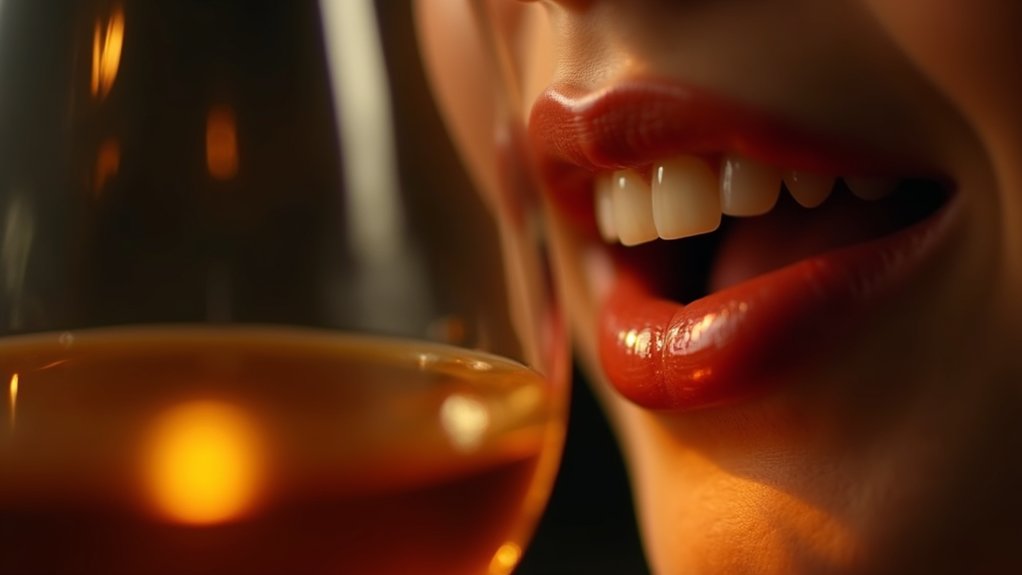
Yes, whiskey can stain your teeth over time due to its pigments and acidity. The chromogens and tannins in whiskey stick to your enamel, leading to discoloration. Its low pH can erode enamel, making your teeth more susceptible to stains. Darker whiskeys, like bourbon, pose a higher risk. To protect your smile, consider diluting your drink and practicing good oral hygiene. For more tips on maintaining a bright smile, you might want to explore effective prevention methods.
Key Takeaways
- Whiskey contains chromogens and tannins that can lead to tooth discoloration over time.
- The acidity of whiskey erodes enamel, increasing susceptibility to staining.
- Darker whiskeys, like bourbon and rye, have a higher staining potential due to their pigments.
- Mixing whiskey with sugary mixers can further exacerbate staining and decay risks.
- Good oral hygiene practices, such as rinsing and regular brushing, are essential to prevent staining.
Understanding Whiskey and Its Composition
When you sip whiskey, you’re engaging with a complex beverage that contains various compounds affecting your teeth.
The composition of whiskey includes chromogens and tannins, which can adhere to tooth enamel, leading to potential staining over time. Additionally, the acidity of whiskey can erode enamel, making your teeth more susceptible to discoloration from other drinks. This erosion can also lead to yellow teeth that are difficult to improve with standard dental hygiene practices. Darker whiskeys, like bourbon and rye, possess a rich color that heightens their staining potential. The aging process in charred barrels contributes to this darker hue, increasing the likelihood of stains. Consistent exposure to stain-causing foods and beverages can further compound the discoloration effects seen with whiskey consumption.
Regular consumption, especially with sugary mixers, can further exacerbate these issues. Maintaining oral hygiene is crucial to mitigate the staining effects of whiskey and preserve the appearance of your teeth.
The Staining Potential of Whiskey
The rich flavors and colors of whiskey make it a popular choice, but these same characteristics also contribute to its staining potential.
Whiskey contains tannins and chromogens that can adhere to tooth enamel, leading to discoloration over time. The dark color increases the risk of stains, especially with frequent consumption. Additionally, mixing whiskey with sugary mixers heightens the risk of tooth decay, further compromising your oral health. Harmful bacteria thrive on sugar, which can exacerbate enamel wear and discoloration. Regular consumption of whiskey can lead to a dead tooth, as the combination of staining and decay can significantly weaken tooth structure. Moreover, maintaining good dental hygiene is essential, as regular dental check-ups can help detect early signs of discoloration.
While regular dental hygiene can help mitigate these effects, limiting whiskey intake is advisable for maintaining a bright smile. Protect your tooth enamel by being mindful of your whiskey choices.
Acidity and Enamel Erosion
While enjoying whiskey, it’s important to contemplate its acidic nature, which can lead to enamel erosion. The low pH level creates an environment for acid attacks on your tooth enamel, increasing the risk of decay and staining. Regular consumption weakens enamel, allowing chromogens and tannins from other beverages to adhere more easily, resulting in deeper stains. This erosion can make your teeth appear yellower as the underlying dentin shows through. Cavities require prompt attention from a dentist upon noticing symptoms. Maintaining good oral hygiene practices is essential to counteract the damaging effects of acidic drinks. Additionally, understanding the causes of bleeding gums can help you take preventive measures as you enjoy alcoholic beverages.
To combat enamel erosion and staining, drink water between shots and maintain good oral hygiene practices. Protect your smile while savoring whiskey by being mindful of its effects.
Factors That Influence Staining
Although whiskey may be a beloved choice for many, several factors influence its potential to stain your teeth.
Whiskey contains chromogens and tannins that can cling to enamel, leading to discoloration. The high acidity of whiskey can erode your enamel, making your teeth more vulnerable to staining from various substances.
Darker varieties, like bourbon, are particularly notorious for their intense color and flavor compounds. Additionally, regular whiskey consumption, especially without proper oral hygiene, can amplify stain accumulation.
Mixing whiskey with dark sodas or sugary mixers further enhances the staining effect due to added sugars, putting your smile at risk. Maintaining excellent dental hygiene is crucial to minimize the risk of stains and protect your enamel.
Preventing Stains From Whiskey
To keep your smile bright while enjoying whiskey, implementing a few preventive measures can make a significant difference.
Start by diluting whiskey with water or soda, reducing its staining potential. After drinking, rinse your mouth with water to wash away any residue.
Don’t forget that regular brushing and flossing are essential in preventing stains from whiskey; they help remove lingering sugars and pigments that can stain your teeth.
Finally, consider using a straw to limit contact between the whiskey and your teeth.
These simple dental care practices can help you enjoy whiskey without compromising your smile.
Effects of Whiskey on Gum Health
When you consume whiskey, you’re not just risking stains on your teeth; your gums can also take a hit.
The high alcohol content can irritate and inflame your gums, increasing the likelihood of gum disease.
Additionally, chronic drinking may impair nutrient absorption, making it harder for your body to maintain healthy gums.
Gum Disease Risks
Consuming whiskey can greatly impact your gum health, increasing the risk of gum disease. Here are some key factors to take into account:
- Irritation: Whiskey can irritate your gums, leading to inflammation and a higher likelihood of gingivitis.
- Acidity: The high acidity of whiskey may erode enamel, making your gums and teeth more susceptible to infections.
- Immune System: Chronic alcohol consumption can weaken your immune system, impairing your body’s ability to fight gum infections.
- Dehydration: Whiskey can cause dry mouth, reducing saliva flow, which is essential for maintaining gum health and neutralizing harmful bacteria.
Inflammation and Irritation
Although whiskey is often enjoyed for its rich flavors, it can lead to significant inflammation and irritation of your gums. The high alcohol content can weaken your immune system, making you more susceptible to gum disease. Chronic consumption may cause dry mouth, reducing saliva and increasing the risk of infections. This inflammation can manifest as swollen or bleeding gums, warning you of underlying health issues.
| Symptoms | Effects on Gum Health |
|---|---|
| Swollen gums | Indicate potential gum disease |
| Dry mouth | Increases infection risk |
| Bleeding gums | Signs of inflammation |
Taking care of your gum health is essential.
Nutrient Absorption Issues
Excessive whiskey consumption can markedly disrupt your body’s ability to absorb essential nutrients, particularly vitamin C and calcium, which are crucial for maintaining healthy gums. This can lead to nutrient absorption issues that exacerbate gum disease and increase the risk of tooth decay.
Key factors include:
- Nutrient Deficiencies: Chronic whiskey intake leads to deficiencies that harm gum health.
- Weakened Immune System: Alcohol weakens your immune response, complicating the fight against infections.
- Inflammation: Impaired healing of gum tissues promotes chronic oral health issues.
- Sugar and Acidity: Whiskey’s sugars and acidity contribute to further absorption problems.
Long-Term Oral Health Considerations
When you regularly enjoy whiskey, it’s important to contemplate the long-term implications for your oral health.
Whiskey’s dark color and chromogens can lead to significant staining of your teeth, while its acidity may erode enamel, increasing the risk of tooth decay.
Additionally, chronic consumption can exacerbate dry mouth, reducing saliva production necessary for neutralizing acids and preventing cavities.
You might also face a heightened risk of gum disease due to alcohol’s inflammatory effects on gum health.
Prioritizing good oral hygiene and scheduling regular dental check-ups is essential to mitigate these long-term effects and preserve your smile.
Maintaining Oral Hygiene After Drinking
Maintaining good oral hygiene after enjoying whiskey is essential for protecting your teeth from staining and decay. Here are some effective practices to follow:
- Brush your teeth before drinking to minimize plaque buildup that traps pigments.
- Alternate sips of whiskey with water to wash away acids and sugars.
- Chew sugar-free gum post-drinking to stimulate saliva, neutralizing acids and removing staining agents.
- Wait at least 30 minutes to brush your teeth after drinking to prevent damaging softened enamel.
Regular dental check-ups will help monitor your oral health, especially after consuming staining alcoholic drinks like whiskey.


