
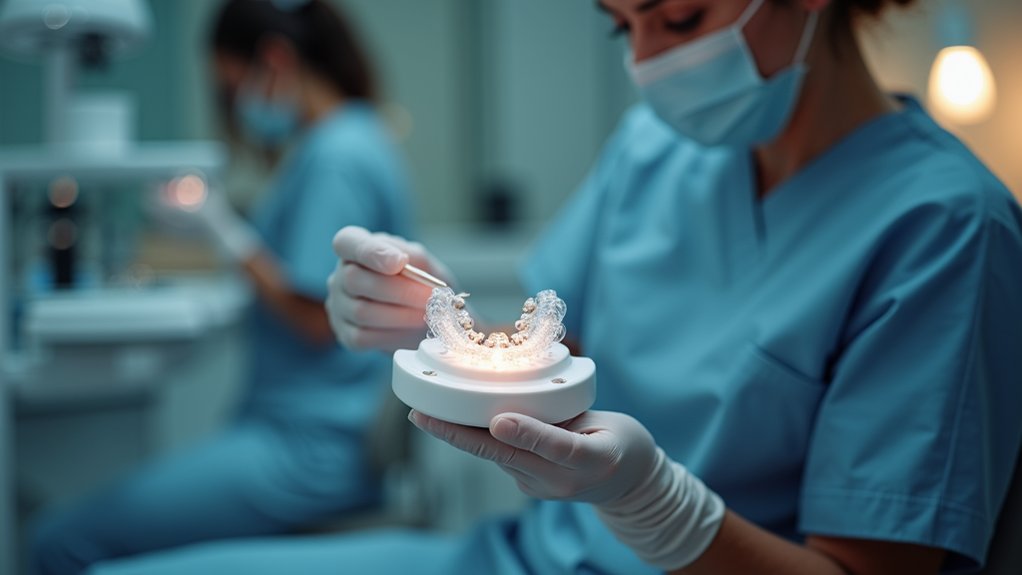
To fix flared teeth, it’s vital to consult an orthodontist who will create a customized treatment plan. Treatments typically involve braces or clear aligners, designed to align your teeth properly. Regular appointments guarantee your progress is monitored and adjustments are made as necessary. After achieving proper alignment, wearing a retainer is essential to maintain your results and prevent relapse. Explore effective strategies for maintaining your dental health and guaranteeing lasting improvements.
Key Takeaways
- Consult an orthodontist to evaluate the severity of flared teeth and develop a personalized treatment plan.
- Consider orthodontic options like traditional braces or clear aligners to gradually correct tooth alignment.
- Maintain regular appointments for progress monitoring and necessary adjustments during treatment.
- Use retainers as directed post-treatment to stabilize tooth positions and prevent relapse.
- Practice good oral hygiene and avoid harmful habits that may disrupt alignment and affect treatment results.
What Are Flared Teeth?
Flared teeth refer to a dental condition where the upper front teeth angle outward, creating a protruding appearance that can disrupt the harmony of your smile. This misalignment often leads to orthodontic issues, impacting both aesthetics and oral health. A second opinion can be beneficial if you’re unsure about the recommended treatment options for flared teeth.
Common causes of flared teeth include genetic factors, bad oral habits, and overcrowding in the jaw. If left untreated, these conditions can result in bite misalignment, increased plaque buildup, and potential gum disease. The bone structure takes time to adjust to new tooth positions, which is why early intervention is essential; consulting with an orthodontist can provide effective treatment for flared teeth, utilizing braces or aligners to align your smile and enhance your overall dental health. Orthodontists focus on tooth and jaw alignment issues, making them the right professionals to address this concern.
Causes of Flared Teeth
Several factors contribute to the development of flared teeth, making it essential to understand their origins.
Overcrowding in the jaw can push teeth outward, creating a protruding appearance. Prolonged habits like thumb sucking and tongue thrusting exert pressure on the front teeth, exacerbating flaring. Additionally, dental implants can serve as a solution for individuals with significant tooth loss due to these habits, providing a stable tooth replacement option. Leaving wisdom teeth untreated can also contribute to crowding and misalignment, further worsening the flaring issue.
Genetics considerably influence the alignment and positioning of your teeth, leaving some individuals more susceptible.
Additionally, improper retainer use after orthodontic treatment can lead to teeth shifting back, resulting in flaring.
Finally, poorly managed tooth extractions may cause adjacent teeth to flare outward due to a lack of support and guidance, further disrupting alignment. Correcting these issues can enhance facial symmetry and improve overall appearance.
Why Fixing Flared Teeth Is Important
When addressing dental concerns, fixing flared teeth is essential for both aesthetic and functional reasons.
An aligned smile not only enhances your appearance but also boosts your confidence. Orthodontic treatment, like braces, can correct flaring, preventing malocclusion and associated health issues. Additionally, cavities can develop more easily in misaligned teeth due to plaque buildup, which can be exacerbated by nighttime toothaches that stem from improper alignment.
Properly positioned teeth reduce the risk of injury during physical activities and improve speech clarity, ensuring you articulate words effectively. Additionally, correcting flared teeth contributes to better oral hygiene; aligned teeth are easier to clean, minimizing plaque buildup and the risk of gum disease. Regular dental checkups are vital for preventing gum disease, as they allow for early detection of issues related to flared teeth.
Prioritizing this treatment benefits both your smile and overall health.
How Orthodontists Fix Flared Teeth
When addressing flared teeth, orthodontists develop customized treatment plans tailored to your specific needs and the severity of the issue. They utilize various orthodontic appliances, such as braces or clear aligners, to guide your teeth into proper alignment. Regular monitoring during follow-up appointments guarantees that adjustments can be made as needed to achieve ideal results. Additionally, using an electric toothbrush for braces can significantly improve oral hygiene during treatment, ensuring that plaque buildup is minimized around the appliances.
Customized Treatment Plans
Orthodontists develop customized treatment plans for flared teeth by thoroughly evaluating the severity of the condition and identifying any underlying causes.
Your orthodontic treatment may involve options like traditional braces or clear aligners, tailored to your specific dental health and age.
Regular appointments are crucial for adjustments and monitoring progress, ensuring effective solutions.
Extensive evaluations might lead to recommendations for additional procedures, such as extractions or orthodontic surgery, if necessary.
Collaborating closely with your orthodontist is essential in adhering to the prescribed treatment regimen, maximizing your chances of achieving optimal outcomes in correcting your flared teeth.
Orthodontic Appliances Utilized
To effectively correct flared teeth, orthodontists employ a variety of orthodontic appliances tailored to each patient’s specific needs. Common treatment options include traditional braces for continuous repositioning, clear aligners for a discreet approach, and palatal expanders to widen the upper jaw in younger patients. In severe cases, orthodontic surgery may be necessary to achieve proper alignment. Here’s a quick overview of these appliances:
| Appliance Type | Purpose |
|---|---|
| Traditional Braces | Gradual repositioning of teeth |
| Clear Aligners | Discreet, removable treatment |
| Palatal Expanders | Create space, reduce flaring |
Each treatment plan is customized and requires regular follow-ups.
Regular Monitoring Importance
Regular monitoring plays an essential role in effectively managing flared teeth, as it allows for timely assessment and adjustment of treatment plans.
Frequent check-ups with your orthodontist enable tracking of tooth movement and prompt addressing of any shifting, reducing the risk of recurrence. During these visits, your orthodontist evaluates the fit and effectiveness of retainers, ensuring proper usage to maintain corrected positions.
Adjustments to braces or aligners during regular visits apply consistent pressure, aiding in alignment and preventing further flaring. Professional assessments help identify emerging issues, allowing for timely interventions crucial to your overall dental health.
The Importance of Retainers After Treatment
While you may have achieved your desired smile through orthodontic treatment, the journey doesn’t end there.
Retainers help maintain corrected tooth positions and prevent relapse, especially with flared teeth. You should wear a retainer as prescribed, typically for 22 hours initially, to stabilize aligned teeth and guarantee the surrounding bone and tissue adapt.
Custom-made retainers, whether acrylic or clear, enhance comfort and fit. Neglecting to use retainers consistently can result in shifting back, necessitating further treatment.
Regular follow-ups with your orthodontist are vital to monitor effectiveness and secure your long-term success in maintaining your beautiful smile.
Tips for Maintaining the Results
Maintaining the results of your orthodontic treatment requires diligence and attention to detail. Always wear your retainer as instructed to prevent your teeth from shifting back to their original flared position.
Schedule regular follow-up appointments to monitor your teeth alignment and make adjustments as needed. Practice good oral hygiene by brushing and flossing daily to avoid plaque buildup.
Additionally, avoid habits that exert pressure on your teeth, like nail biting or chewing hard objects. Finally, keep your retainer clean with non-abrasive materials and store it properly when not in use to guarantee it remains effective in keeping your teeth in their desired position.


