

Braces can enhance dental alignment and improve facial symmetry, but they can’t fix the underlying skeletal structure of a weak chin.
While they effectively address overbites and underbites, significant chin enhancement usually requires surgical options or growth modification techniques, especially in younger patients.
If you have concerns about a recessed chin, early intervention is vital for ideal outcomes.
Learn more about the alternatives and what might work best for your facial aesthetics.
Key Takeaways
- Braces primarily correct dental alignment issues, not the skeletal structure of a weak chin.
- They can improve bite alignment but do not enhance chin projection in adults.
- Early intervention with braces may benefit children with developing jaws, but results vary.
- Growth modification appliances are more effective than braces for promoting jaw development in younger patients.
- Significant chin enhancement typically requires surgical options rather than relying solely on braces.
Understanding Weak Chins and Their Causes
Understanding weak chins involves recognizing the various factors that contribute to their development, as multiple elements can influence jaw structure.
Genetic influences play a significant role; inherited traits from parents or grandparents can lead to underdeveloped jawbone and mandibular retrognathia. Additionally, family history often reveals patterns in chin development.
Mechanical habits, such as thumb-sucking or tongue-thrusting, can disrupt normal jaw development, pushing the lower jaw backward.
Dental issues like malocclusion and overbite further exacerbate the weak chin appearance by misaligning teeth and causing the lower jaw to recede. Addressing these factors is essential for promoting healthy jaw development. Furthermore, aging can contribute to the recession of the chin, highlighting the importance of understanding various influences on chin strength.
The Role of Braces in Orthodontics

While braces are commonly associated with straightening teeth, their role in orthodontics extends far beyond aesthetics.
You’ll find that various braces types, like traditional metal and lingual braces, help correct bite alignment issues such as overbites and underbites. By shifting teeth into proper positions, braces can enhance chin projection and facial symmetry, aligning with your orthodontic goals. Orthodontists typically place braces, and their expertise ensures that treatment plans are tailored to individual needs. In fact, orthodontists complete dental school and undergo additional residency training to specialize in these treatments. This is crucial because jaw alignment plays a fundamental role in shaping appearance. Additionally, braces apply slow, gradual pressure to teeth, which facilitates their movement into desired positions. For adolescents, early intervention can guide jaw development effectively.
However, it’s important to note that while braces address dental alignment, they may not resolve severe skeletal issues, which might necessitate additional treatments like orthognathic surgery for permanent solutions.
Age Impact on Orthodontic Effectiveness
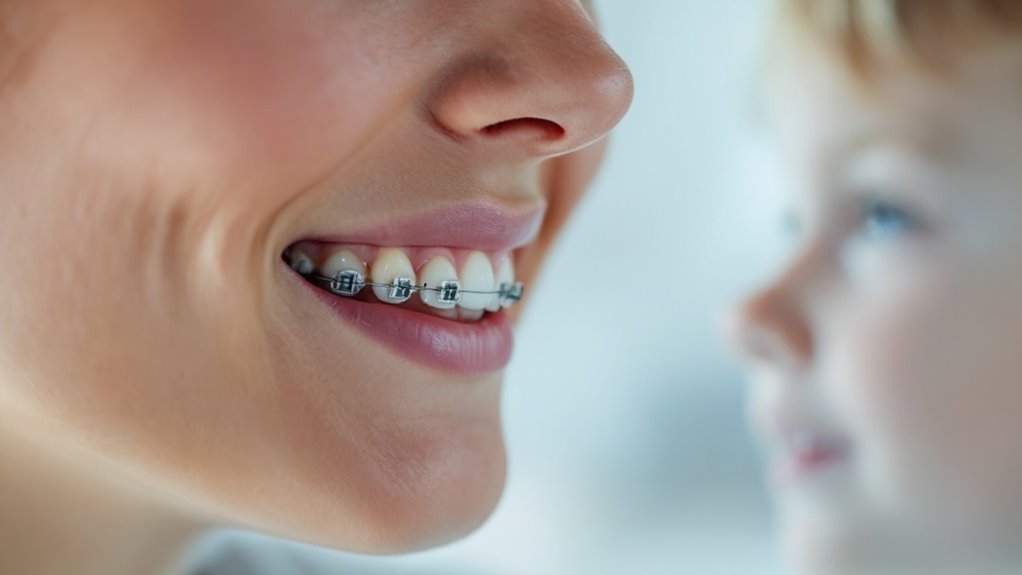
When considering orthodontic treatment, age plays an essential role in its effectiveness. In adolescents, growth modification techniques can greatly influence facial development, while adults may experience different outcomes due to completed skeletal growth. Understanding these differences helps tailor your orthodontic approach for ideal results. However, it’s important to note that teeth can still be moved and adjusted to improve smiles and bites at any age. Early intervention can also prevent worsening conditions and promote better oral health.
Optimal Treatment Age
The age at which orthodontic treatment begins greatly impacts its effectiveness, especially for individuals with a weak chin.
Ideal treatment timing considerations are essential for achieving desired outcomes.
- Early childhood (ages 7-9) allows for developmental guidance, using palatal expanders to address jaw deficiencies.
- Adolescence (ages 10-14) is often the peak period for braces, as active growth facilitates swift adjustments and thorough alignment. Starting braces treatment during childhood is generally more successful due to developing jaws and teeth.
- Adulthood (ages 18+) presents unique challenges, as bone growth is complete, making early intervention preferable for effective correction.
Starting treatment at the right age can greatly enhance your orthodontic results.
Growth Modification Techniques
Starting orthodontic treatment at the right age sets the stage for effective growth modification techniques, particularly for individuals with a weak chin.
Utilizing appliances like the Herbst, Bionator, and Twin Block during significant growth periods maximizes their effectiveness. For instance, pre-puberty is ideal for using a Bionator to stimulate lower jaw development through muscle activation. Additionally, fixed appliances like Forsus can correct severe discrepancies if initiated before growth ceases. Early mixed dentition is the optimal time for treating most malocclusions, and timing your treatment with growth spurts enhances appliance effectiveness, making it essential to align interventions with developmental stages for ideal jaw realignment and overall facial aesthetics.
Adolescent vs. Adult Outcomes
While age plays a critical role in orthodontic outcomes, understanding the differences between adolescent and adult responses to treatment is essential for optimizing results.
- Adolescents exhibit greater adaptability, allowing for faster tooth movement due to ongoing growth. Early orthodontic treatment can significantly aid in addressing potential future issues during this developmental phase.
- Adults generally demonstrate better compliance, positively influencing treatment duration despite biological constraints.
- Anchorage loss tends to be more pronounced in adolescents, affecting case management.
These factors highlight that while adolescents benefit from growth advantages, adults leverage their commitment to achieve successful outcomes.
Tailoring treatment approaches according to these differences can enhance effectiveness for both demographics.
Orthodontic Treatments for Weak Chins
When considering orthodontic treatments for a weak chin, it’s essential to recognize the limitations of braces, which primarily address dental alignment rather than skeletal structure. Growth modification appliances and functional orthodontics can play a significant role, especially in pediatric patients, by promoting proper jaw development. Understanding these options enables you to make informed decisions about achieving a balanced facial profile. Additionally, early diagnosis and intervention can help mitigate the effects of mandibular retrognathia, leading to better outcomes in jaw alignment and overall facial aesthetics.
Growth Modification Appliances
Growth modification appliances play an essential role in orthodontic treatments for individuals with a weak chin, as they effectively harness the body’s natural growth potential to enhance facial balance.
These appliances vary in design and effectiveness:
- Fixed appliances, like the Herbst, provide consistent therapeutic pressure and superior outcomes. This type of appliance is particularly beneficial for addressing recessive lower jaw issues.
- Removable appliances, such as the Bionator, require high compliance, often yielding less effective results.
- Headgear can address severe overjet, aligning treatment with growth spurts for ideal results.
Choosing the right growth modification appliance guarantees improved appliance effectiveness, ultimately contributing to a more harmonious facial profile.
Functional Orthodontics Options
Functional orthodontics offers a range of treatment options designed to address the challenges associated with a weak chin, particularly in children and adolescents whose jaw development is still ongoing.
Utilizing functional appliances, you can promote jaw expansion and repositioning, effectively correcting bite misalignments. Myofunctional therapy complements these appliances by strengthening facial muscles, enhancing treatment outcomes.
Early intervention is vital for ideal results, ideally between ages 10 and 14. Regular monitoring guarantees the best approach, whether through non-extraction techniques or, in some cases, surgical options.
Post-treatment retainer use is fundamental to maintain jaw positioning and prevent relapse, regardless of age.
Limitations of Braces
While braces are a common orthodontic solution for various dental issues, they’ve significant limitations when addressing a weak chin.
Braces can’t alter the bone structure causing a recessed chin.
In adults, jaw bones are fully developed, making braces ineffective for reshaping mature bone.
A weak chin often requires surgical intervention, as braces primarily correct dental malocclusion, not skeletal issues.
Ultimately, understanding these braces limitations is vital for achieving desired chin aesthetics.
For thorough improvement, consider consulting an orthodontist about combining orthodontic treatments with potential surgical options.
Surgical Options for Chin Projection
When considering surgical options for enhancing chin projection, patients typically have a range of techniques to choose from, each catering to specific needs and aesthetic goals.
Chin augmentation often employs various implant materials, such as silicone or porous polyethylene, to enhance projection.
For more thorough adjustments, genioplasty offers a multi-dimensional approach, allowing repositioning in multiple directions.
In cases of asymmetry, osseous genioplasty effectively corrects imbalances that implants alone can’t address.
Many patients also opt for concurrent procedures like rhinoplasty to achieve harmonious facial proportions.
Consulting with a qualified surgeon guarantees you explore the most suitable options tailored to your needs.
Overbite and Its Relationship With Weak Chins
Overbite and weak chins are closely linked, affecting both dental function and facial aesthetics. The severity of an overbite often correlates with the appearance of a weak chin, as jaw positioning can exacerbate this issue.
- A severe overbite may push the lower jaw backward, diminishing chin aesthetics.
- While braces can correct dental alignment, they don’t address the underlying skeletal concerns of a weak chin.
- Jaw retrognathia complicates treatment, necessitating a thorough approach that may include surgery for ideal outcomes.
Understanding this relationship is crucial for effective treatment planning and achieving desired results.
Long-Term Outcomes of Orthodontic Treatments
As you consider orthodontic treatments, it’s essential to understand their long-term outcomes, which extend beyond immediate aesthetic improvements.
Achieving a long-term smile enhances oral health, reducing the risk of tooth decay and gum disease. With improved gum health and bite stability, you’ll experience better chewing capabilities and reduced TMJ strain. Many individuals may also benefit from early detection of dental problems, ensuring that any underlying issues are addressed promptly. Moreover, effective oral hygiene practices, such as using an electric toothbrush, can further support long-term dental health. Regular use of fluoride toothpaste is also crucial for cavity protection. Psychosocial impacts can’t be overlooked; many report boosted self-confidence and increased social opportunities.
Adhering to retainers is vital for maintaining orthodontic satisfaction.
Frequently Asked Questions
Can Braces Be Used for Adults With Weak Chins?
Braces aren’t effective for adults with weak chins since they only align teeth, not restructure bone. For ideal results, consider combining adult orthodontics with surgery, which addresses underlying jaw alignment and enhances facial aesthetics.
How Long Does Orthodontic Treatment Take for Weak Chins?
Orthodontic treatment duration for weak chins typically ranges from 12 to 24 months, depending on severity. The effectiveness of treatment often improves with age-appropriate timing and consistent use of prescribed appliances and retainers.
Are There Non-Surgical Options for Severe Chin Recessiveness?
For severe chin recessiveness, you can explore non-invasive treatments like JawTrac® alignment and dermal fillers. These orthodontic alternatives offer effective solutions without surgery, enhancing both function and aesthetics while minimizing recovery time and associated risks.
What Are the Risks of Chin Augmentation Procedures?
Chin augmentation carries surgical risks like infection, anesthesia complications, scarring, and nerve damage. You should discuss these potential issues with your surgeon to guarantee you make an informed decision that prioritizes your safety and aesthetic goals.
How Do Lifestyle Choices Affect Chin Structure Development?
Your lifestyle choices greatly shape chin structure development. Dietary impacts, like soft foods, limit jaw growth, while exercise influence strengthens facial muscles. Prioritizing tougher diets and jaw exercises can foster better craniofacial health and alignment.
Conclusion
In conclusion, while braces can enhance dental alignment and may subtly improve the appearance of a weak chin, they aren’t a guaranteed remedy for chin projection. If you’re seeking more pronounced changes, exploring surgical options might be worth considering. Ultimately, consulting with an orthodontist will provide you with tailored insights and a clearer understanding of your choices. Remember, every smile tells a story, and sometimes, a little enhancement can make a significant difference in that narrative.


