
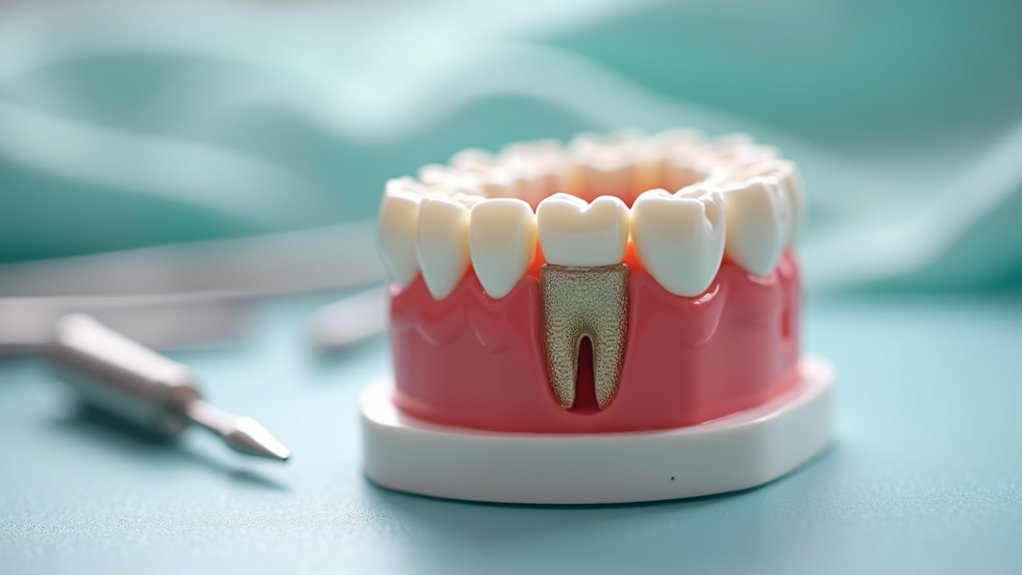
A bone graft can indeed prevent teeth from shifting by stabilizing your jawbone and maintaining its density after tooth loss. When you lose a tooth, your jawbone may start to resorb, leading to gaps and potential misalignment of adjacent teeth. By integrating a graft into the area, you enhance bone volume, which not only supports dental implants but also guarantees your teeth stay in their proper positions. Discover more about how this process works and its benefits.
Key Takeaways
- Bone grafts fill gaps left by missing teeth, preventing adjacent teeth from shifting into these spaces.
- They stabilize the dental arch by restoring lost jawbone density, maintaining proper tooth alignment.
- By preserving jawbone integrity, bone grafts facilitate future dental implants, further supporting tooth positioning.
- Enhanced oral health from grafts prevents complications associated with shifting teeth.
- Regular dental visits are essential to monitor graft longevity and ensure continued alignment of teeth.
Understanding Bone Grafts and Their Purpose
When you experience tooth loss, the jawbone can begin to deteriorate, leading to gaps that allow adjacent teeth to shift and misalign. Bone grafting serves to rebuild and strengthen your jawbone, addressing bone resorption caused by missing teeth. This procedure helps maintain bone volume and density, preserving the natural contours of your facial structure. By providing a stable foundation for dental implants, bone grafts guarantee successful integration with existing bone, which is essential for long-term oral health. Additionally, bone grafting can stimulate new bone growth, further enhancing the stability of your dental structure. Ultimately, this process mitigates the risk of shifting teeth, misalignment, and related bite issues, promoting overall stability and oral function. Furthermore, understanding dental implants can also help you appreciate the importance of a solid jawbone for supporting multiple tooth replacements. Correcting jaw alignment through interventions like bone grafting can significantly contribute to maintaining proper dental positioning.
The Consequences of Tooth Loss on Jawbone Health
Tooth loss greatly impacts jawbone health, leading to a cascade of detrimental effects.
- Bone loss occurs as the jawbone lacks stimulation from tooth roots.
- Reduced bone density compromises oral health and function.
- Gaps from missing teeth allow adjacent teeth to shift, causing misalignment. Additionally, gum disease can exacerbate these issues, increasing the risk of further complications.
- Altered jaw structure can lead to a sunken appearance, changing natural contours. Additionally, without proper treatment, jawbone shrinkage may complicate future dental procedures.
To combat these issues, dental bone grafts can play an essential role in preserving jawbone structure, preventing further shifting, and maintaining overall oral health after tooth loss. Additionally, All-on-4 Dental Implants can provide a long-term solution by securing a full arch of teeth with minimal implants.
Prioritizing these solutions can help you protect your smile and its supporting structures.
How Bone Grafts Help Maintain Tooth Alignment
Although losing a tooth can lead to significant shifts in alignment, bone grafts provide an essential solution to maintain the stability of your dental arch. By preserving jawbone structure, bone grafts prevent adjacent teeth from shifting into the void left by a missing tooth. When a tooth is lost, the jawbone begins to resorb, risking misalignment and bite issues. Grafting fills in areas of lost jawbone density, stabilizing the dental arch and ensuring proper support for remaining teeth. This maintenance of jawbone integrity enhances oral health, prevents complications, and facilitates future dental implants, preserving your overall tooth alignment. Additionally, sinus lift surgery may be necessary when there is insufficient bone volume for implants, further supporting dental health. Regular dental visits are crucial for maintaining the longevity of any dental work, including bone grafts. Proper dental hygiene is crucial for maintaining the longevity of any dental work, including bone grafts.
The Bone Grafting Procedure Explained
Before undergoing a bone graft, a thorough assessment of your oral health and jawbone structure is vital to determine the most effective approach for your specific needs.
A comprehensive evaluation of your oral health is crucial before proceeding with a bone graft.
During this dental procedure, local anesthesia guarantees comfort while an incision is made in your gums.
- Graft material, such as autografts or synthetic options, is placed in the targeted area.
- It’s secured to promote integration with existing bone.
- Post-operative care is essential for oral hygiene and managing discomfort.
The healing process varies, typically requiring several months for the graft to fuse with natural bone, encouraging regeneration. This process is crucial as it can help strengthen weak teeth by up to 75% of a tooth’s surface.
Recovery and Long-Term Outlook After a Bone Graft
Once the bone graft procedure is complete, your body begins the essential process of integrating the graft material with your existing jawbone.
The bone graft heals over a period of 3 to 12 months, promoting natural bone regeneration and maintaining bone structure.
Regular follow-ups are crucial for monitoring healing and ensuring the success of the dental bone graft.
Keeping up with oral hygiene during recovery helps prevent infections, which can jeopardize the graft and potentially lead to tooth loss.
A successful bone graft not only restores density but also supports long-term oral health, enhancing facial aesthetics and preventing a sunken appearance.
Alternatives to Bone Grafting for Preventing Teeth Shifting
If you’re looking for alternatives to bone grafting to prevent teeth shifting, several effective options exist.
These procedures can help maintain dental structure and prevent complications related to tooth loss:
- Dental bridges: Fill gaps left by missing teeth, preventing adjacent teeth from shifting.
- Removable dentures: Offer support to surrounding teeth, helping maintain their positions.
- Space maintainers: Used primarily in children to hold the space of a lost tooth until a permanent tooth erupts.
- Orthodontic treatment: Braces apply consistent pressure to align teeth correctly.
Regular dental check-ups are also essential for monitoring potential shifting and facilitating timely intervention.


