
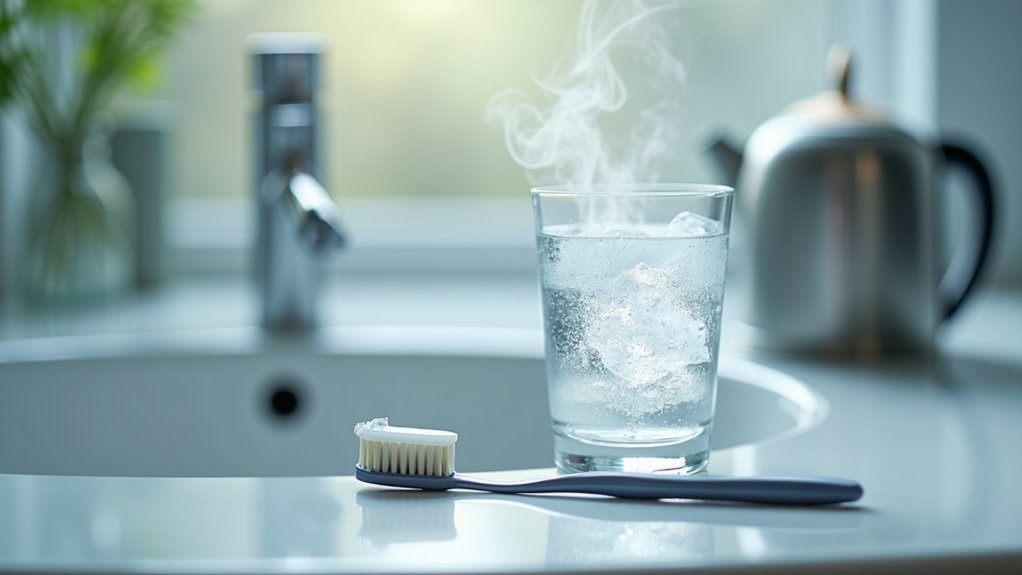
When brushing your teeth, the temperature of the water—whether hot or cold—doesn’t greatly affect your oral health. What’s more important is your brushing technique and consistency. Cold water might cause discomfort if you have sensitive teeth, while warm water can soothe sensitivity and help remove plaque more easily. Proper technique is key for effective cleaning, and if you’d like to know more about how to enhance your oral hygiene routine, there are additional tips waiting for you.
Key Takeaways
- Water temperature has minimal impact on oral health; both hot and cold water are effective for brushing.
- Cold water may cause discomfort for those with sensitive teeth and can harden plaque.
- Warm water can soothe sensitivity and soften plaque, aiding in its removal.
- Proper brushing technique is more important than water temperature for effective oral hygiene.
- Consistent use of fluoride toothpaste enhances oral health, regardless of water temperature used for brushing.
Water Temperature Options for Brushing
When it comes to brushing your teeth, the temperature of the water you use can vary based on personal preference, but it doesn’t greatly impact your oral health. Most people use tap water, and studies indicate that water temperature doesn’t enhance fluoride toothpaste effectiveness. If you have sensitive teeth, you might prefer warm water for its soothing properties, while cold water could cause discomfort. Ultimately, what matters most is your brushing technique and consistency. It’s also important to note that using toothpaste without sodium lauryl sulfate may help alleviate dry mouth issues. Regular dental checkups are crucial for maintaining dental health, regardless of whether you choose hot or cold water for rinsing. The Oral-B Vitality electric toothbrush, known for its effective plaque removal, can enhance your brushing routine. Focus on brushing twice daily to maintain oral health, regardless of whether you choose hot or cold water for rinsing.
Effects of Cold Water on Oral Health
Using cold water to brush your teeth can lead to discomfort if you have sensitive teeth, as the temperature may aggravate your condition. However, it can also aid in plaque removal by hardening buildup, making it easier to brush away. Maintaining good oral hygiene practices will help you choose the best water temperature for your oral health. Additionally, being aware of habits like clenching teeth during physical activities can help prevent further sensitivity and discomfort. Sensitivity to cold water may indicate tooth decay or gum issues that should be addressed to maintain overall dental health.
Cold Water Sensitivity Impact
Cold water can considerably impact individuals with sensitive teeth, often leading to discomfort during brushing. If you experience tooth sensitivity, cold water can provoke sharp pain, making it challenging to maintain proper oral hygiene.
Additionally, exposure to cold water may reduce blood flow in your gums, potentially hindering healing and the strengthening of your teeth over time. Chronic use of cold water can also contribute to enamel damage, increasing the risk of tooth deterioration. Using expired mouthwash may exacerbate these risks by introducing harmful bacteria into your oral environment. Regular flossing and brushing routines can help mitigate some of these sensitivity issues and improve overall oral health. Furthermore, maintaining a consistent oral care routine is vital for preventing tartar buildup and promoting dental health.
Plaque Removal Benefits
Experiencing sensitivity from cold water can complicate your oral hygiene routine, but there are some potential benefits to contemplate.
Cold water can help harden plaque, making it easier to remove during brushing. While brushing habits are vital for effective plaque management, the temperature of the water isn’t a major factor in cleaning efficacy.
Individuals with plaque buildup might find that cold water assists in their cleaning efforts, although it doesn’t enhance fluoride toothpaste’s effectiveness. Additionally, prioritizing regular check-ups can help catch potential issues before they become costly problems.
It’s essential to prioritize regular dental check-ups and proper techniques over water temperature for ideal oral health benefits. Your commitment to effective brushing is key.
Benefits of Warm Water for Sensitive Teeth
If you have sensitive teeth, brushing with warm water can provide significant benefits.
It soothes painful sensitivity, enhances cleaning efficacy by generating more foam, and supports overall gum health.
Soothing Painful Sensitivity
For those dealing with sensitive teeth, brushing with warm water can offer significant relief from painful sensations. Unlike brushing with cold water, which may intensify discomfort, warm water soothes soreness and minimizes sharp pain.
It also helps soften plaque, making removal easier without aggressive techniques that could aggravate sensitivity. Additionally, warm water promotes better blood flow in your gums, aiding healing and strengthening your teeth.
This gentle approach not only alleviates discomfort but also supports gum health, ultimately reducing the risk of tooth decay. Embracing warm water can transform your brushing experience for the better.
Enhanced Cleaning Efficacy
When you choose to brush your teeth with warm water, you significantly enhance the cleaning efficacy of your routine.
Warm water effectively softens plaque, making it easier to remove during brushing. This temperature generates more foam, lifting food particles more efficiently than cold water, making your brushing more effective.
For those with sensitive teeth, warm water provides a soothing experience, reducing discomfort while maintaining effective cleaning.
Consistently using warm water can also support tooth enamel, promoting a gentler brushing experience.
Improved Gum Health
Brushing with warm water can remarkably enhance your gum health, especially for those dealing with sensitive teeth. Using hot water to brush helps alleviate discomfort and softens plaque, making it easier to remove while you clean. This gentle approach promotes improved gum health by allowing for thorough cleaning without irritation.
Additionally, warm water generates more foam, which aids in removing food particles, further supporting overall oral hygiene. Drinking warm water can also strengthen tooth enamel, offering protective benefits against sensitivity and gum issues.
Prioritizing warm water in your routine can greatly contribute to keeping your teeth and gums healthy.
Scientific Research on Water Temperature and Brushing
Recent scientific studies have examined the impact of water temperature on brushing effectiveness, revealing intriguing insights about oral health.
A study published by the National Library of Medicine found no significant differences in oral health outcomes when using hot versus cold water. Participants brushed with both temperatures, and results showed that water temperature doesn’t greatly influence cleaning efficacy.
Instead, the research suggests that your brushing technique is far more critical for maintaining healthy teeth and gums. While you may prefer hot or cold water, either is acceptable for effective brushing when combined with proper technique.
Importance of Brushing Technique
Mastering the right brushing technique is essential for effective oral hygiene.
To maintain your oral health, you should brush your teeth twice daily for two minutes, regardless of the temperature of the water. Hold your toothbrush at a 45-degree angle to the gum line, using gentle, circular motions to remove plaque without damaging your gums.
This proper brushing technique not only disrupts bacterial films but also enhances the effectiveness of fluoride toothpaste. Consistently applying this method helps prevent tooth decay and gum disease.
For personalized guidance, consult your dentist on techniques tailored to your specific dental needs.
Recommendations for Optimal Oral Hygiene
Maintaining ideal oral hygiene goes beyond just mastering proper brushing techniques. To guarantee you keep your teeth healthy, consider these recommendations:
- Brush consistently with fluoride toothpaste, regardless of whether you’re brushing with hot water or cold.
- Floss daily to remove plaque and food particles that your toothbrush can’t reach.
- Schedule biannual dental check-ups for personalized advice and to monitor your oral health.


