
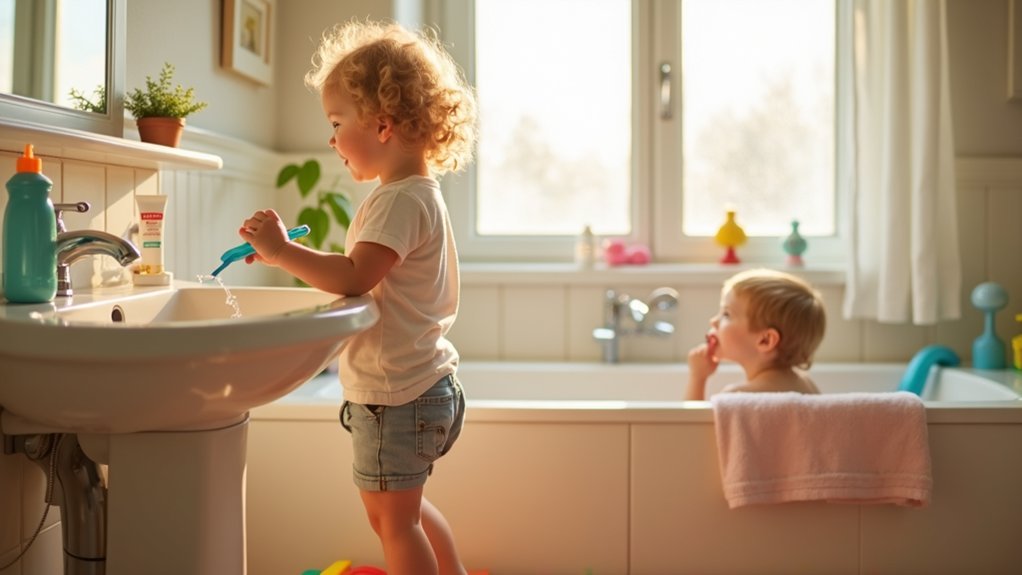
Kids can usually start brushing their own teeth between ages 6 and 8. Before they go solo, watch for signs of readiness, like good hand-eye coordination and excitement about hygiene. You should still supervise their brushing until they’re around 8 to guarantee proper technique and thoroughness. Making brushing fun with songs or games can help too. Curious about how to encourage this independence or when to schedule dental visits? There’s plenty more to explore!
Key Takeaways
- Children can start brushing with assistance around age 3, gradually developing independence by ages 6 to 8.
- Good coordination skills, like tying shoes, indicate a child may be ready to brush independently.
- Supervision is essential until at least age 8 to ensure proper technique and prevent cavities.
- Effective brushing requires the ability to brush for two minutes and understand proper toothpaste usage.
- Encouraging excitement about oral hygiene helps foster independence and lifelong brushing habits.
When Can Kids Start Brushing Their Own Teeth?
When should kids start brushing their own teeth? Typically, children can begin brushing with your help around age 3, allowing you to guide them in proper hygiene.
By ages 6 to 8, most kids develop the skills needed for independent brushing, similar to tying shoelaces. Before letting your child brush alone, make sure they can brush for a full two minutes and reach all areas of their mouth. It’s vital to supervise until at least age 8 to maintain those essential hygiene practices and prevent cavities. Supporting their journey to independence can foster good habits for a lifetime! Additionally, just as pain typically lasts a week after braces tightening, it’s important to encourage your child to be gentle while brushing to avoid discomfort. Regular flossing at least once a day is also essential for their overall oral health, helping to prevent cavities and gum disease. Moreover, establishing a routine can help ensure consistent denture care habits as they grow older.
Signs Your Child Is Ready to Brush Alone
As your child approaches ages 6 to 8, you’ll start noticing signs that they’re ready to brush their teeth on their own.
Look for good coordination skills, like tying their shoes, and effective brushing techniques that cover all areas of their mouth. It’s also important to ensure they use a soft bristle toothbrush to protect their gums while brushing. Teaching them about the importance of regular dental check-ups can further reinforce their understanding of maintaining good oral health.
If they show excitement about taking charge of their oral hygiene, it’s a clear signal they’re ready for this important step! Additionally, ensure they understand the importance of oral hygiene for overall health, which will motivate them to maintain their dental care routine.
Coordination Skills Demonstrated
Around ages 6 to 8, many children begin to show the coordination skills necessary for brushing their teeth on their own. If your child can tie their shoes, button shirts, or use utensils, they may be ready to handle a toothbrush independently.
Good hand-eye coordination allows them to maneuver the toothbrush effectively, reaching all surfaces of their teeth and gums. They should also be able to perform brushing movements in small circular motions to properly brush their teeth. Additionally, successful spitting out toothpaste instead of swallowing it signals their motor skill development, essential for maintaining good oral health. It’s important to encourage them to use an electric toothbrush as these devices can enhance their brushing experience and effectiveness. Furthermore, using an electric toothbrush helps remove plaque more efficiently, making it easier for kids to maintain healthy teeth and gums. Studies show that electric toothbrushes are capable of making thousands of strokes per minute, which can significantly improve their brushing results.
Effective Brushing Techniques
Effective brushing techniques are essential for your child to maintain good oral hygiene independently.
To determine if your child is ready to brush alone, look for these signs:
- They can tie their shoes, indicating sufficient manual dexterity.
- They consistently use proper brushing techniques.
- They can effectively clean all areas of their mouth.
- They can brush for the recommended two minutes.
- They master spitting out toothpaste instead of swallowing it.
In addition, ensure they understand the importance of comprehensive oral care to support their long-term dental health. Observing these indicators will help guarantee your child is prepared for this important milestone in their oral care routine.
Eagerness for Independence
Many parents notice their child’s enthusiasm for independence when it comes to brushing their teeth. If your child, typically aged 6 to 8, is asking to brush their own teeth, it’s a promising sign.
Look for good hand coordination, like tying shoelaces, which indicates readiness. If they can use proper brushing techniques, reach all mouth areas, and brush for the recommended two minutes, they’re likely prepared for this responsibility.
Their willingness to use fluoride toothpaste without swallowing and the ability to spit out excess are additional indicators. Observing them complete brushing tasks without prompting can confirm their readiness for independence.
Supervising Your Child’s Brushing Routine
Supervising your child’s brushing routine is essential for developing good dental habits.
Until they’re at least 8, you’ll want to make certain they use the right techniques and cover all tooth surfaces.
Gradually encouraging independence while monitoring their progress helps set them up for a lifetime of healthy smiles.
Importance of Supervision
Making sure kids brush their teeth properly is essential for their oral health, and supervision plays a crucial role in this process.
Here’s why supervising your child’s brushing routine matters:
- It guarantees proper technique and thorough cleaning until they’re at least 8 years old.
- You can monitor fluoride toothpaste usage, limiting it to a pea-sized amount.
- You’ll confirm that brushing lasts a full two minutes, twice daily.
- Supervision helps clean all tooth surfaces and gum lines, reducing cavities.
- Regular checks reinforce good habits and highlight hard-to-reach areas.
Techniques to Monitor
While you might think your child can brush their teeth without help, actively monitoring their routine is key to fostering good habits. Supervise their brushing technique until at least age 8, ensuring they use a pea-sized amount of fluoride toothpaste.
Confirm they brush for a full two minutes, twice daily, and check that all areas of the mouth, including gum lines, are covered. Encourage daily flossing to support overall dental care and prevent plaque buildup.
Regularly assess their habits to reinforce good practices and make adjustments as needed, setting them up for a lifetime of healthy smiles.
Encouraging Independence Gradually
As your child becomes more confident in their brushing routine, it’s important to encourage their independence while still providing guidance.
You can help your child become able to brush effectively by:
- Supervising their technique until at least age 8.
- Ensuring a pea-sized amount of fluoride toothpaste is used.
- Confirming they brush for a full two minutes, twice daily.
- Checking that they clean around gum lines and hard-to-reach spots.
- Encouraging daily flossing to build a complete oral hygiene routine.
These practices not only help your kids brush well but also prepare them for successful dental checkups in the future.
Tips to Make Brushing Fun and Effective
Making tooth brushing enjoyable and effective can be a game-changer for kids and parents alike. Encourage your child to brush their teeth by choosing a colorful or character-themed toothbrush and toothpaste.
Use a fun two-minute brushing song or a timer to keep them engaged. Create a brushing calendar or sticker chart to reward their consistent efforts, helping to establish good dental habits.
Turn brushing into a family activity by doing it together, fostering camaraderie. Additionally, explore interactive brushing apps or games that transform the experience into a fun challenge, making those two minutes feel like an exciting adventure!
What If Your Child Refuses to Brush?
When your child flat-out refuses to brush their teeth, it can feel frustrating, but understanding their perspective can help you navigate this challenge.
Here are some tips to help your child embrace brushing:
- Turn brushing into a game or fun challenge.
- Let them choose a toothbrush and toothpaste they love.
- Use a brushing app for interactive engagement and rewards.
- Explain why oral health matters in simple terms.
- Establish a consistent routine to normalize brushing.
Why Parental Supervision Matters
Although kids may seem enthusiastic to take charge of their oral hygiene, parental supervision remains essential for developing effective brushing habits.
Until your child is at least 8, guiding them during brushing teeth sessions guarantees they clean all surfaces effectively and use the right amount of fluoride toothpaste.
Supervision helps them learn to spit instead of swallow, reinforcing the importance of proper technique.
Checking in during brushing also encourages the recommended two-minute duration.
Schedule a Pediatric Dental Visit
Scheduling a pediatric dental visit as soon as your child’s first milk teeth appear is crucial for acclimating them to the dental environment.
Aim for regular dental check-ups every six months to guarantee peak oral health.
During these visits, you can expect:
- Personalized advice on brushing habits
- Tips for maintaining a positive outlook about dental visits
- Early identification of potential oral health issues
- Guidance on proper brushing techniques, twice a day
- Support in fostering a healthy attitude toward dental care
These steps will help your child develop a lifelong commitment to their dental health.
Fluoride Varnish and Fissure Sealants
To keep your child’s teeth healthy and strong, incorporating fluoride varnish and fissure sealants into their dental care routine is essential. Fluoride varnish, recommended for kids aged 3 and up, should be applied twice a year to strengthen enamel and reduce tooth decay by up to 70%. Fissure sealants, applied to molars around ages 6-7, cover chewing surfaces with a plastic coating, lasting 5 to 10 years for long-term cavity protection. Consult your pediatric dentist to determine the best timing for these treatments.
| Treatment | Benefits |
|---|---|
| Fluoride Varnish | Strengthens enamel, reduces decay |
| Fissure Sealants | Protects molars, lasts years |


