
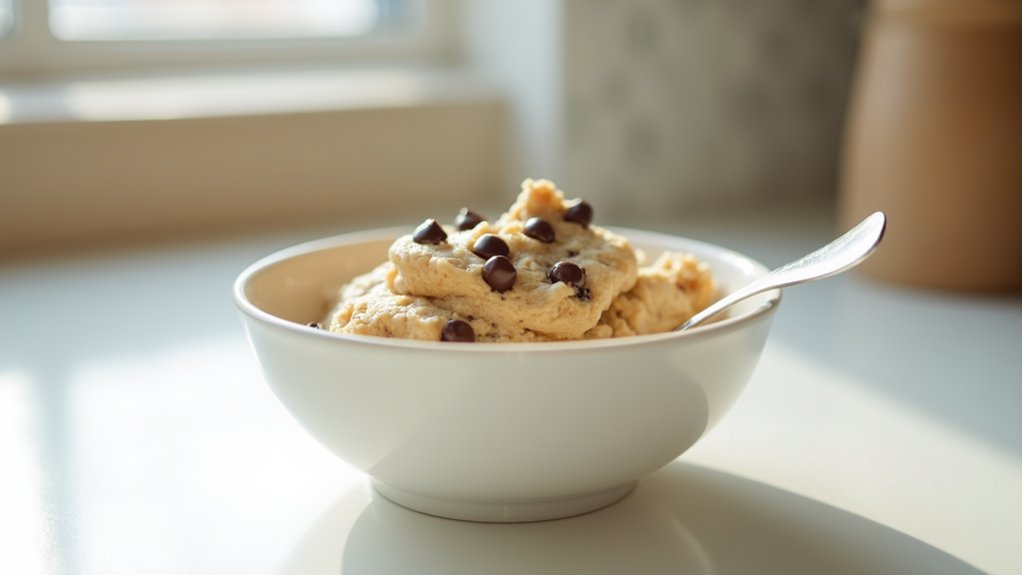
You shouldn’t eat cookie dough after wisdom teeth removal. Its sticky texture can dislodge blood clots, leading to dry socket and potential infections due to raw eggs and high sugar content. Instead, stick to soft foods that promote healing and require minimal chewing, like yogurt and applesauce. It’s essential to protect your extraction site while shifting back to solid foods. Learn more about safe dietary options and tips for a smoother recovery.
Key Takeaways
- Eating cookie dough post-extraction risks dislodging blood clots, potentially leading to dry socket.
- The raw eggs in cookie dough pose a risk of foodborne illness.
- High sugar content in cookie dough can attract bacteria, increasing infection risk.
- Chewing cookie dough may irritate gums and delay the healing process.
- Opt for soft, nutritious alternatives like yogurt or smoothies during recovery instead.
Understanding the Risks of Eating Cookie Dough Post-Extraction
While it might be tempting to indulge in cookie dough after your wisdom teeth removal, it’s crucial to understand the associated risks.
The sticky nature of cookie dough can cling to the extraction site, potentially dislodging blood clots and leading to dry socket. Additionally, the raw eggs often present a risk of foodborne illness, complicating your healing process. High sugar content can attract bacteria, increasing the likelihood of tooth infection at the surgical site. Chewing can irritate your gums and delay healing. Furthermore, untreated wisdom teeth issues can complicate your recovery if they arise due to poor dietary choices during this healing period. Moreover, delayed healing can result from consuming foods that disrupt the recovery process, making it even more important to choose your diet wisely.
It’s wise to wait at least a week before reintroducing solid foods to guarantee proper recovery.
The Importance of a Soft Food Diet After Surgery
Following wisdom teeth removal, adhering to a soft food diet is crucial for your recovery. This diet helps avoid irritating the surgical sites and promotes a smooth healing process. By consuming soft foods, you minimize the risk of dislodging blood clots, which can lead to complications such as dry socket. Foods that require minimal chewing reduce jaw strain and discomfort. It’s important to maintain proper nutrition while your mouth heals effectively, as gradually reintroducing solid foods is essential for a successful recovery. Additionally, just as dental implants require proper oral hygiene for longevity, taking care of your surgical sites is essential for preventing infection. After surgery, you might also experience pain and sensitivity similar to what patients feel after orthodontic adjustments. Here are some soft foods to contemplate:
| Soft Foods to Eat | Foods to Avoid |
|---|---|
| Mashed potatoes | Crunchy snacks |
| Applesauce | Tough meats |
| Yogurt | Hard fruits |
| Smoothies | Chewy candies |
Safe Alternatives to Cookie Dough for Recovery
After your wisdom teeth removal, choosing safe alternatives to cookie dough can help ease your recovery. Nutritious soft snacks like yogurt with fruit or applesauce provide gentle options, while flavorful smoothies packed with blended fruits deliver essential nutrients. Additionally, maintaining good oral health during your recovery is crucial to prevent complications and support healing, as poor oral hygiene practices can lead to issues such as gum disease. Consuming soft foods that are easy to chew and swallow not only keeps you comfortable but also supports your healing process.
Nutritious Soft Snacks
Recovering from wisdom teeth removal can be challenging, especially when it comes to choosing what to eat. Nutritious soft snacks are crucial for your recovery.
Opt for yogurt and applesauce, which are easy to chew and packed with essential vitamins. Mashed bananas provide a creamy texture and are high in potassium, supporting heart health.
Soft-cooked eggs are protein-rich and gentle on your digestive system, while pudding and Jell-O offer enjoyable dessert options that require minimal chewing.
Additionally, smoothies made with plant-based milk and soft fruits keep you hydrated and deliver a variety of nutrients, making them ideal post-surgery choices. It’s essential to avoid hard, crunchy foods that can damage sutures during your recovery.
Flavorful Smoothie Options
While nutritious soft snacks play a key role in your recovery, flavorful smoothies offer a delightful way to enjoy a variety of tastes and nutrients without irritating your healing gums.
You can blend soft fruits like bananas, mangoes, and berries for essential nutrients. Incorporate a protein source, such as Greek yogurt or plant-based protein powder, to maintain a creamy texture. Non-dairy milk alternatives like almond or oat milk enhance flavor while being gentle on your stomach.
Customize your smoothie with spinach or avocado for added vitamins and healthy fats. Verify you’re blending smoothies until completely smooth for safe consumption during recovery.
How to Protect Your Extraction Site While Eating
To protect your extraction site while eating, avoid using straws, as the suction can dislodge vital blood clots.
Instead, chew slowly and carefully on the opposite side of your mouth to reduce pressure on the wound.
These precautions help promote healing and prevent unnecessary complications.
Avoid Straws and Sipping
Avoiding straws and sipping is essential after wisdom teeth removal, as these actions can create suction that dislodges blood clots, leading to complications like dry socket.
Instead, drink directly from a cup to protect your extraction site. When consuming soft foods, tilt your head slightly forward to let gravity assist without suction.
Chew carefully on the opposite side of the extraction site to minimize irritation and support your healing process.
Always follow your dentist’s instructions regarding post-operative care, including the necessity to avoid straws.
This attention will help guarantee a smoother recovery after your dental procedure.
Chew on Opposite Side
Chewing on the opposite side of your extraction site is essential for a smooth recovery after wisdom teeth removal.
This practice reduces pressure on the surgical area, minimizing the risk of dislodging blood clots vital for healing. By doing so, you also prevent food particles from entering the wound, lowering the chances of infection.
Opt for soft-textured foods, like cookie dough, and take small bites while chewing slowly to avoid discomfort.
Maintaining this technique not only aids in the healing process but also allows you to gradually reintroduce solid foods while protecting your extraction site during recovery.
When to Reintroduce Solid Foods After Wisdom Teeth Removal
While your body heals after wisdom teeth removal, it’s important to be mindful of when to reintroduce solid foods into your diet.
During the first week, focus on soft foods like mashed potatoes, yogurt, and smoothies to support your healing process. Avoid chewy foods that could irritate the extraction sites.
After four to six days, if you’re comfortable, you can begin a gradual reintroduction of solid foods. Always consult with your dentist to determine the right timeline based on your specific recovery.
Staying away from crunchy options will help prevent complications during this initial recovery phase.
Tips for a Smooth Recovery and Diet Transition
To guarantee a smooth recovery and movement back to your regular diet after wisdom teeth removal, it’s essential to follow specific dietary guidelines.
For the first week, focus on soft foods like mashed potatoes, yogurt, and applesauce to support your healing sites. Avoid sugary foods, including cookie dough, as they can attract bacteria and complicate the recovery process.
After a week, gradually reintroduce soft treats, but consult your dentist for personalized advice.
Prioritizing nutritious alternatives will aid in your recovery, ensuring you shift safely back to your regular diet while minimizing risks associated with dental surgery.


