
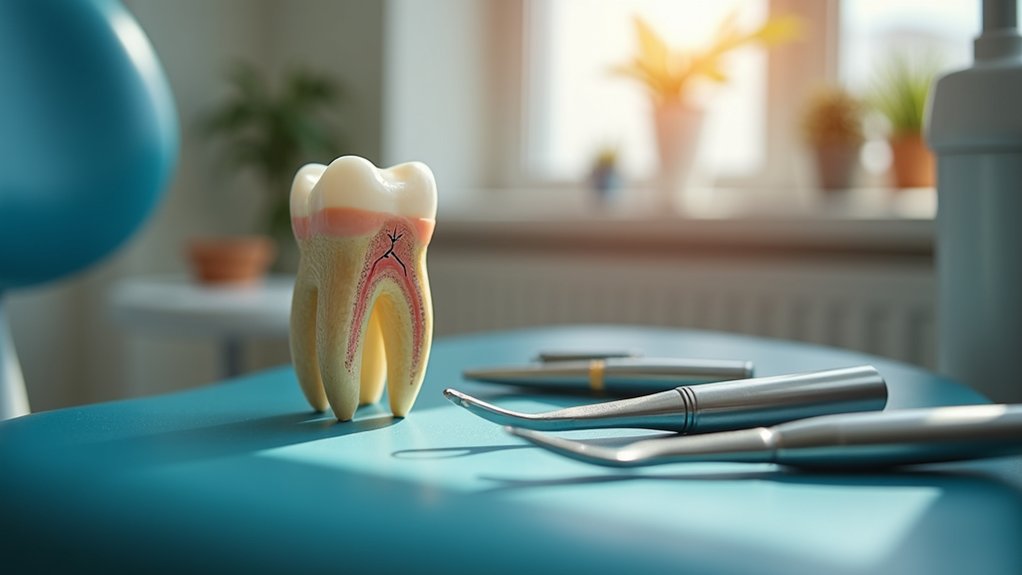
To fix cracked teeth from grinding, consult your dentist for an evaluation. Treatment options may include dental bonding for minor cracks, crowns for severe damage, or root canal therapy if the pulp is affected. It’s crucial to use custom night guards to protect against future grinding and alleviate jaw pain. Regular dental check-ups help identify issues early. Finding the right solutions can enhance your oral health, and there’s more to discover about preventive measures.
Key Takeaways
- Consult a dentist for a thorough evaluation and diagnosis of cracked teeth resulting from grinding.
- Consider dental bonding for minor cracks to restore tooth integrity and appearance.
- Opt for dental crowns for more severe damage, providing full coverage and protection.
- Explore root canal treatment if cracks extend into the tooth pulp to prevent infection.
- Use custom night guards to prevent further grinding and protect teeth while sleeping.
Understanding Cracked Teeth and Their Causes
When you notice sharp pain while biting or sudden sensitivity to temperature, it might indicate a cracked tooth.
Sharp pain while biting or sudden temperature sensitivity could signal a cracked tooth.
Cracked teeth often result from excessive pressure due to grinding or clenching, commonly linked to sleep bruxism. This condition affects about 8% of middle-aged adults and 15% of adolescents. The pain typically lasts for about a week after clenching episodes, making it crucial to address the issue promptly.
The primary causes include age, hard food consumption, and dental trauma, with molars frequently impacted. Individuals over 50 are particularly vulnerable.
If left untreated, cracked teeth can lead to serious complications, like tooth abscesses, causing persistent pain and requiring more extensive dental care. Awareness of clenching habits is essential to prevent further damage.
Early intervention is vital to prevent worsening issues.
Symptoms of Cracked Teeth From Grinding
If you’re grinding your teeth, you might notice symptoms like sharp pain or increased sensitivity when biting down, especially on hard foods. You could also experience discomfort from hot or cold beverages, which can disrupt your daily life. Recognizing these signs early is vital for preventing further complications, as poor oral hygiene practices can exacerbate the condition. Additionally, persistent grinding can lead to tooth infections if cracks allow bacteria to enter the tooth. Furthermore, nighttime toothaches can become more pronounced due to increased blood flow, making it essential to address any grinding habits promptly.
Common Symptoms Experienced
Cracked teeth from grinding can lead to several noticeable symptoms that you shouldn’t ignore. These signs often indicate cracked tooth syndrome, affecting your oral health.
Be on the lookout for:
- Sharp pain when biting down, especially with certain foods
- Increased sensitivity to temperature, particularly cold
- Irregular tooth shape or visible cracks requiring dental evaluation
- Frequent jaw pain or discomfort in the neck and shoulders, which can also be exacerbated by clenching your jaw. Additionally, tooth pain can sometimes radiate to other areas, causing earaches due to overlapping nerve pathways.
Recognizing these symptoms early can help prevent more severe issues, such as tooth abscesses. Additionally, maintaining good oral hygiene practices can help prevent further damage to cracked teeth.
If you experience any of these signs, consult a dental professional for a thorough assessment and appropriate treatment.
Pain and Sensitivity
Experiencing pain and sensitivity in your teeth can be alarming, especially if you grind your teeth. You might notice pain when you bite or chew, ranging from mild discomfort to sharp, intense pain.
Increased sensitivity to hot or cold beverages may make enjoying your favorite foods uncomfortable. Poor dental hygiene can exacerbate these issues and lead to further complications if left untreated. Symptoms can vary, often appearing during episodes of grinding.
If left untreated, cracked teeth can lead to infections, resulting in gum issues and persistent pain. Seeking prompt treatment, such as dental crowns, can help alleviate these symptoms and protect your dental health from further complications. Additionally, maintaining oral hygiene is crucial to prevent further damage and avoid infections.
Impact on Daily Life
While managing the symptoms of cracked teeth from grinding, you might find that daily life becomes increasingly challenging. The discomfort can affect your ability to enjoy meals and engage in conversations.
You may also experience:
- Sharp pain when biting, varying in intensity
- Increased sensitivity to hot and cold temperatures
- Persistent tooth pain or headaches upon waking
- Swelling in the gums surrounding the cracked tooth
These symptoms can lead to anxiety about eating and social interactions, impacting your overall quality of life.
Addressing these issues with a dental professional is essential for restoring comfort and confidence.
Diagnosis and Evaluation of Cracked Teeth
When you suspect a cracked tooth, a detailed diagnosis is essential for effective treatment. Your dentist will conduct a thorough evaluation, focusing on symptoms like pain during biting and temperature sensitivity. They may use specialized tools, as standard X-rays often miss cracks. Discussing your dental history, bruxism, and eating habits helps identify potential causes.
| Diagnostic Focus | Description |
|---|---|
| Symptoms | Pain, sensitivity, discomfort |
| Special Tools | Crack detection instruments |
| Contributing Factors | Age, bruxism, hard foods |
Timely evaluation is vital to prevent complications such as infections.
Treatment Options for Cracked Teeth
Once a cracked tooth has been diagnosed, it’s important to explore the appropriate treatment options tailored to the severity of the damage.
Exploring treatment options for a cracked tooth is crucial for preserving both its integrity and your overall oral health.
Effective treatments include:
- Dental bonding for minor chips, filling cracks with resin.
- Dental crowns for more severe damage, offering full coverage and protection.
- Root canal treatment for cracks extending into the pulp, addressing potential infections.
- Regular check-ups to identify cracks early, preventing complications.
Timely intervention can save your fractured tooth and maintain oral health, so don’t hesitate to consult your dentist about the best solutions for your cracked teeth.
Preventive Measures to Avoid Further Damage
To prevent further damage to cracked teeth, you should consider using custom night guards, which effectively protect against teeth grinding during sleep.
Regular dental check-ups are essential for monitoring your dental health and catching potential issues early.
Additionally, managing stress through techniques like mindfulness can help reduce bruxism, further safeguarding your teeth.
Custom Night Guards
Custom night guards play an essential role in protecting your teeth from further damage caused by bruxism, or teeth grinding.
These custom-fitted devices create a barrier that helps prevent cracked teeth and preserves your dental work.
- Distributes grinding forces evenly
- Reduces jaw pain and morning headaches
- Protects crowns, veneers, and other restorations
- Requires regular dentist consultations for ideal fit
Investing in a custom night guard not only shields your teeth but also enhances your overall oral health.
Make certain to follow up with your dentist to guarantee it remains effective as your dental structure changes.
Stress Management Techniques
While custom night guards are effective in protecting your teeth from damage, addressing the root causes of bruxism is equally important. Implementing stress management techniques can greatly reduce muscle tension and grinding frequency. Here are some effective strategies:
| Technique | Benefits | Implementation Tips |
|---|---|---|
| Mindfulness Meditation | Reduces anxiety and promotes relaxation | Start with 5 minutes daily |
| Regular Physical Activity | Lowers overall stress levels | Aim for 30 minutes most days |
| Cognitive-Behavioral Therapy | Develops coping strategies for stress | Seek a qualified therapist |
Establishing a relaxing bedtime routine can further enhance your sleep quality and help mitigate bruxism.
Regular Dental Checkups
Regular dental checkups play an essential role in maintaining your oral health, as they help identify cracked teeth early and allow for timely intervention.
By attending these visits, you can benefit from:
- Assessments for symptoms like sensitivity or pain related to grinding
- Recommendations for preventive measures, such as night guards
- Monitoring for signs that may lead to more serious issues, like root canals
- A proactive approach to address potential problems before they escalate
Prioritizing regular dental checkups guarantees that you’re taking the necessary steps to protect your teeth and maintain their integrity against the effects of grinding.
When to Consult a Dentist for Cracked Teeth
When should you consult a dentist for cracked teeth? If you feel sharp pain while biting or chewing, it’s important to seek help, as this may indicate a cracked tooth needing immediate care.
Persistent sensitivity to cold or irregular shapes in your teeth are also signs that warrant professional evaluation. If you grind your teeth, and notice unexplained damage or pain, consult a dentist to determine if bruxism is at play.


