
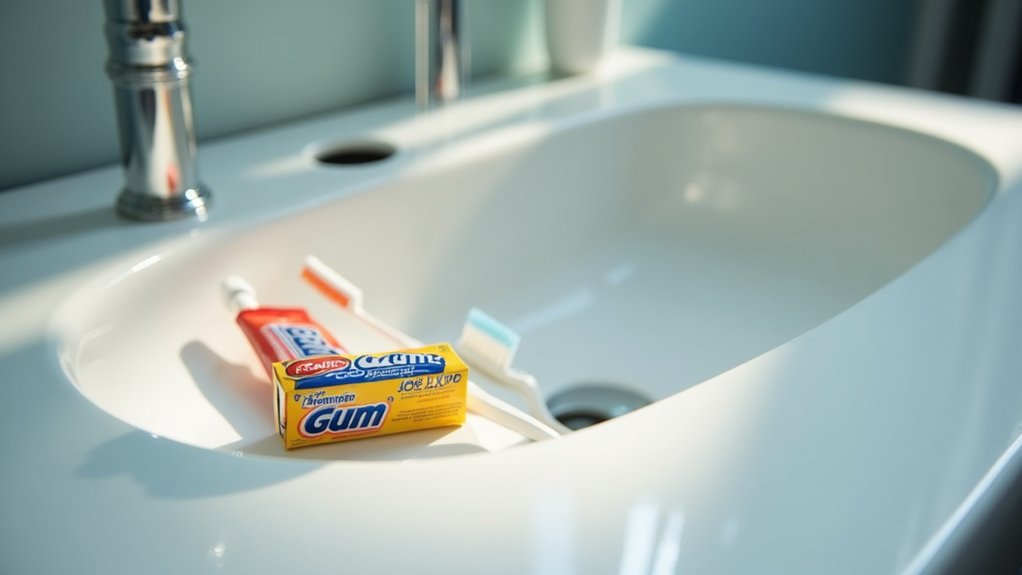
Yes, you can chew gum after brushing your teeth, and it can actually benefit your oral hygiene. Chewing sugar-free gum boosts saliva production, which helps neutralize acids and wash away food particles. It’s especially beneficial if the gum contains xylitol, known for reducing cavity-causing bacteria. Just be sure to limit your chewing to about 20 minutes to avoid jaw discomfort. To maximize your oral health, you might want to explore best practices that make chewing gum even more effective.
Key Takeaways
- Yes, you can chew gum after brushing teeth, but opt for sugar-free varieties to protect dental health.
- Chewing sugar-free gum stimulates saliva production, which aids in oral hygiene and neutralizes acids.
- Limit gum chewing to 20 minutes to prevent jaw discomfort and potential TMJ issues.
- Wait 30 minutes after consuming acidic foods before chewing gum to protect tooth enamel.
- Chewing gum should complement, not replace, regular brushing and flossing for effective oral care.
Understanding the Benefits of Chewing Gum After Brushing
While you might think brushing your teeth is enough for maintaining oral health, chewing gum afterward can offer additional benefits. Chewing gum stimulates saliva production, which helps neutralize acids and protect tooth enamel. Studies show that water flossing can reduce gum bleeding and remove plaque more effectively than traditional flossing. Furthermore, water flossers can also help eliminate bacteria that lead to plaque buildup, enhancing your oral hygiene routine.
Opting for sugar-free gum, especially those containing xylitol, can reduce plaque and enhance overall dental health without risking tooth decay. Chewing sugar-free gum for about 20 minutes after meals aids in removing food particles and complements your oral hygiene routine. Additionally, studies highlight that using a water flosser can significantly reduce plaque and improve gum health, making it a great addition to your routine.
However, remember that chewing gum should never replace the essential practices of brushing and flossing for ideal dental care. Embrace this simple habit to further support your oral health!
The Importance of Choosing Sugar-Free Gum
Choosing sugar-free gum is essential for maintaining ideal oral health, as it considerably lowers the risk of tooth decay. Unlike regular gum, which feeds harmful bacteria, sugar-free gum often contains xylitol, a natural sweetener that inhibits cavity-causing bacteria. Chewing sugar-free gum can also stimulate saliva flow, which is beneficial for maintaining oral hygiene. The American Dental Association recognizes that chewing sugar-free gum can complement regular brushing with electric toothbrushes for optimal plaque removal.
Many brands are recognized by the American Dental Association (ADA) for their effectiveness in promoting oral hygiene. Chewing sugar-free gum stimulates saliva flow, which neutralizes acids, washes away food particles, and helps remineralize tooth enamel. Additionally, regular dental check-ups can further enhance your oral health by identifying potential issues early on.
How Chewing Gum Affects Saliva Production
Chewing gum plays a crucial role in boosting saliva production, which is essential for maintaining dental health.
As you chew, your salivary glands are stimulated, increasing saliva flow that helps neutralize acids and wash away food particles. This enhanced saliva not only aids in remineralizing tooth enamel but also keeps your mouth’s pH balanced, reducing the risk of tooth decay. Additionally, increased saliva production can help prevent tooth decay by promoting a healthier oral environment. Regular chewing can also reduce gum disease by flushing out bacteria and food debris that accumulate between teeth. Moreover, incorporating flossing at least once a day into your oral hygiene routine can further enhance your dental health and protect against plaque buildup.
Saliva and Dental Health
Many people mightn’t realize that chewing gum, especially sugar-free options, plays an important role in promoting dental health by boosting saliva production.
Saliva is essential for neutralizing acids in your mouth, protecting tooth enamel, and rinsing away food particles and plaque. By increasing saliva flow, chewing gum contributes to better oral hygiene and helps combat tooth decay. In addition, maintaining good oral hygiene can also help prevent sensitivity issues, as seen with products like Sensodyne Rapid Relief Toothpaste, which effectively treats sensitivity caused by exposed dentin.
Saliva also contains crucial minerals like calcium and phosphate that aid in remineralizing your teeth. Chewing sugar-free gum for about 20 minutes after meals can greatly enhance saliva production, reducing the risk of acid erosion and supporting your overall dental health.
Gum Chewing Mechanism
When you chew gum, you actively stimulate your salivary glands, greatly boosting saliva production. This increase can be up to ten times compared to resting states.
Enhanced saliva flow helps neutralize harmful acids in your mouth, reducing the risk of tooth decay and enamel erosion. Saliva is rich in minerals like calcium and phosphate, which aid in remineralizing your teeth.
The mechanical action of chewing also dislodges food particles and plaque, promoting better hygiene. Opting for sugar-free gum, especially those with xylitol, can further enhance saliva’s protective effects against cavity-causing bacteria, supporting your dental health.
The Role of Xylitol in Oral Health
Although it might seem counterintuitive to enjoy sweets while maintaining oral health, xylitol offers a natural solution. This sweetener helps prevent plaque bacteria from adhering to your teeth, greatly reducing the risk of tooth decay. Chewing gums that contain xylitol stimulate saliva production, neutralizing harmful acids and aiding in tooth enamel remineralization. Regularly consuming 6-10 grams of xylitol can enhance your dental health.
| Benefits of Xylitol | Description |
|---|---|
| Reduces Tooth Decay | Prevents plaque bacteria from sticking |
| Stimulates Saliva | Neutralizes acids and remineralizes enamel |
| Safe for Most Individuals | Moderation is key to avoid discomfort |
Best Practices for Chewing Gum After Brushing
When you chew gum after brushing, timing is essential for maximizing its benefits.
Opt for sugar-free options, particularly those with xylitol, to support your dental health.
Remember to practice moderation, as excessive gum chewing can lead to discomfort and should complement, not replace, your regular oral hygiene routine.
Timing of Chewing Gum
While chewing gum after brushing your teeth isn’t harmful, it’s generally more beneficial to chew gum after meals. This practice enhances saliva production, neutralizes acids, and helps clear food particles. For best results, chew sugar-free gum for up to 20 minutes after meals.
| Timing | Activity | Benefits |
|---|---|---|
| After Meals | Chew Gum | Stimulates saliva flow |
| Post Brushing | Chew Gum | Less effective for oral cleanliness |
| After Acidic Foods | Wait 30 Minutes | Protects tooth enamel |
Incorporating sugar-free gum can help in preventing tooth decay and promoting dental health.
Choosing Sugar-Free Options
Choosing sugar-free gum after brushing your teeth can greatly enhance your oral health. Here are some best practices to take into account:
- Opt for sugar-free gum to markedly reduce the risk of tooth decay and gum issues.
- Look for gums sweetened with xylitol, which actively helps reduce plaque.
- Chewing sugar-free gum stimulates saliva production, neutralizing acids and rinsing away food particles.
- Choose gums with the ADA Seal of Acceptance, ensuring safety and effectiveness in promoting oral health.
Moderation and Frequency
Chewing sugar-free gum can be a great way to enhance your oral health after brushing, but it’s important to practice moderation and be mindful of frequency.
Aim to chew gum for no more than 20 minutes at a time to avoid jaw discomfort and potential TMJ issues. Regular chewing can boost saliva production and aid oral hygiene, especially after meals when it’s most effective at neutralizing acids.
However, excessive chewing may lead to dental erosion due to acidic flavorings, so choose your gum wisely.
Potential Limitations and Considerations
Although chewing gum can provide some benefits for oral health, it’s important to recognize its limitations and considerations.
- Chewing gum shouldn’t replace regular oral hygiene practices like brushing and flossing.
- While sugar-free gum stimulates saliva production, it’s less effective than brushing for plaque removal.
- Excessive chewing may lead to jaw discomfort or TMJ issues.
- Some sugar-free gums contain acidic flavorings that could contribute to dental erosion if consumed in excess.
Professional Recommendations for Gum Use
When considering the use of gum for oral health, it’s essential to follow professional recommendations to maximize its benefits.
Dental professionals often advise you to chew sugar-free gum after meals, as it boosts saliva production, neutralizing acids and protecting tooth enamel.
However, remember that chewing gum shouldn’t replace regular oral hygiene practices like brushing and flossing.
Professional guidelines emphasize the advantages of gums containing xylitol, which can reduce plaque and lower tooth decay risk.
Always consult your dentist for personalized recommendations on gum choices that align with your specific oral health needs and conditions.


