
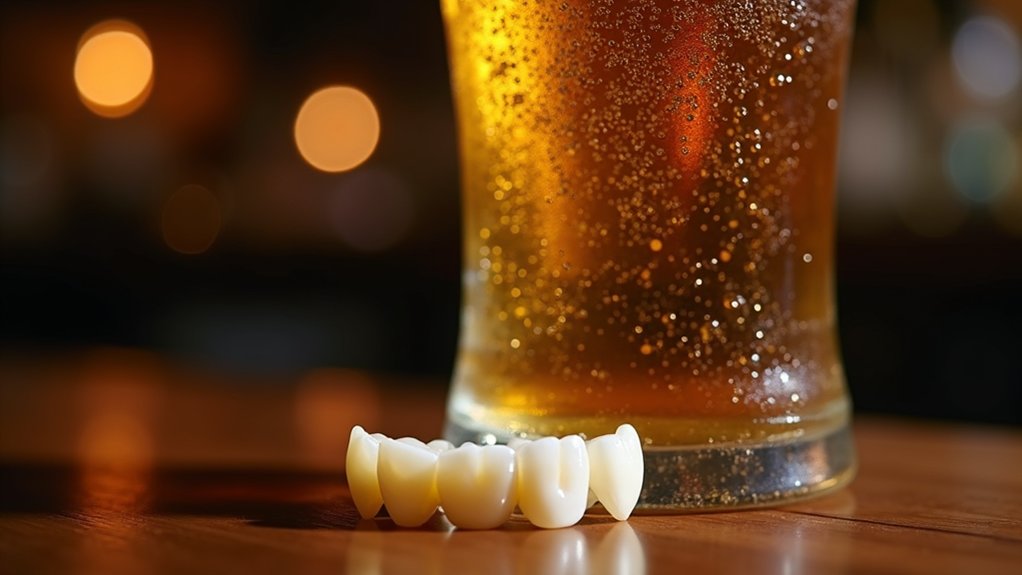
Yes, beer can be bad for your teeth. Its acidity and sugar content lead to enamel erosion and increased tooth sensitivity, raising your risk of cavities and gum disease. Carbonation further contributes to enamel damage, while dark beers may stain your teeth. However, you can enjoy beer with protective strategies. Staying informed about your dental health and care practices can help mitigate these risks. Discover more ways to maintain your smile while enjoying your favorite brew.
Key Takeaways
- Beer’s acidity can lead to enamel erosion, increasing the risk of cavities and tooth sensitivity.
- Sugars in beer promote harmful bacteria growth, contributing to gum disease and tooth decay.
- Dark beers can cause noticeable staining due to chromogens, affecting the appearance of teeth.
- Excessive beer consumption can exacerbate dental issues, necessitating professional dental intervention.
- Moderation, good oral hygiene, and protective strategies can mitigate beer’s negative effects on dental health.
Understanding Beer’s Impact on Dental Health
While enjoying a cold beer may be a common pastime, it’s important to understand how it affects your dental health. Beer’s acidity, with a pH ranging from 4.0 to 5.5, can lead to enamel demineralization, increasing your risk of dental problems like cavities. The carbonation converts to carbonic acid in your mouth, exacerbating tooth sensitivity. Additionally, sugars in beer foster bacteria growth, raising your chances of gum disease and plaque formation. Harmful bacteria can thrive on sugars, further compounding the risk of tooth decay. Water flossers can effectively reduce gum bleeding and improve overall oral health, making them a beneficial addition to your dental care routine. Dark beers may stain your teeth due to chromogens. Aging can naturally lead to yellowing as enamel wears down over time, making it even more crucial to maintain good oral hygiene. Remember, beer in moderation can mitigate some risks, but maintaining good oral hygiene is essential to counteract potential oral health problems.
The Benefits of Moderate Beer Consumption
Moderate beer consumption can actually support your bone health and help control oral bacteria. The high silicon content in beer strengthens both teeth and bones, particularly if you prefer ales over lagers. Additionally, certain compounds in beer may inhibit plaque-causing bacteria, contributing to better overall dental health. Moreover, studies suggest that water flossers can effectively remove plaque buildup associated with beer consumption, making it crucial to maintain good oral hygiene to prevent any adverse effects associated with poor oral care. Regular brushing with an electric toothbrush can enhance plaque removal, making it especially important for those who enjoy moderate beer.
Bone Health Support
If you’re looking for ways to support your bone health, you might be surprised to learn that moderate beer consumption could offer benefits. Significantly, ales contain silicon, which aids in bone density and strength, providing about 8mcg per 16oz. Research suggests that postmenopausal women drinking this amount daily may better manage osteoporosis compared to traditional treatments. Additionally, regular intake of moderate beer can enhance the bones supporting your teeth and gums, promoting dental health. This protective layer helps prevent related issues, making moderate beer consumption a valuable addition to a holistic approach to bone and dental health. Moreover, maintaining good oral hygiene is essential for preventing periodontal disease, which can contribute to bone loss around teeth. Consistent brushing and flossing can significantly reduce gum inflammation and improve overall gum health. Furthermore, regular dental checkups are crucial for maintaining overall oral health and ensuring that any potential problems are identified early.
Oral Bacteria Control
How can moderate beer consumption positively influence your oral health? By promoting oral bacteria control, it can be beneficial when enjoyed responsibly. Here are some advantages:
- Reduces harmful oral bacteria with high hop content.
- Stimulates saliva production, naturally rinsing your mouth.
- Strengthens teeth and bones thanks to silicon and calcium.
- Protects gum tissue with antioxidant properties, preventing inflammation.
Additionally, moderate beer consumption can help reduce gum disease by maintaining a balanced oral microbiome. When you embrace moderate beer consumption, you support your overall oral health while maintaining good dental hygiene practices.
Risks Associated With Excessive Beer Intake
Excessive beer intake poses several risks to your dental health, particularly through enamel erosion, increased plaque formation, and the potential development of gum disease.
The acidic nature of beer can wear down enamel, making your teeth more vulnerable to decay. Additionally, the high sugar content and carbonation can contribute to plaque buildup, exacerbating oral health issues.
Enamel Erosion Risks
While enjoying a cold beer might be a common pastime, it’s important to recognize the potential risks it poses to your dental health, particularly concerning enamel erosion.
Excessive beer intake can lead to:
- Increased acidity that demineralizes enamel.
- Carbonation converting to carbonic acid, heightening sensitivity.
- Irreversible enamel loss requiring dental intervention.
- Dark beers causing noticeable stains and discoloration.
These factors elevate your risk of tooth decay and cavities.
Increased Plaque Formation
The risks associated with beer consumption extend beyond enamel erosion to include increased plaque formation.
Excessive drinking beer introduces sugars that bad bacteria thrive on, leading to harmful acid production. This environment encourages plaque formation, especially when dry mouth from alcohol reduces saliva flow, impairing your mouth’s natural cleansing ability.
If you’re not maintaining regular dental care, plaque can progress to more severe issues like gingivitis.
While there are health benefits to moderate beer intake, balancing enjoyment with oral hygiene is essential to prevent long-term damage.
Gum Disease Development
Many people may not realize that heavy beer consumption can considerably impact gum health, increasing the risk of developing gum disease.
The connection between alcohol and gum health is critical for effective dental care. Here are some risks to contemplate:
- Weakened immune response, heightening gum disease risk.
- Increased bleeding gums compared to nondrinkers.
- Acidity leading to enamel erosion and gum recession.
- Dry mouth promoting bacterial growth and plaque accumulation.
How Beer Contributes to Tooth Decay and Gum Disease
How does beer impact your oral health?
Beer’s acidity, with a pH of 4.0 to 5.5, can erode your enamel, making your teeth more sensitive and susceptible to cavities. The carbonation converts to carbonic acid in your mouth, further weakening enamel.
Additionally, sugars in beer feed harmful bacteria, promoting plaque buildup and increasing the risk of tooth decay. Regular consumption may lead to dry mouth, reducing saliva production and leaving your gums vulnerable to bacterial growth.
Finally, dark beers contain chromogens that can stain your teeth, compromising both dental aesthetics and overall health.
Strategies for Protecting Your Teeth While Enjoying Beer
While enjoying a cold beer, you can take simple steps to protect your teeth and maintain your oral health.
Enjoying a cold beer doesn’t have to compromise your dental health; simple precautions can keep your smile bright.
Here are some effective strategies for protecting your healthy teeth during beer consumption:
- Alternate sips of water with beer to neutralize acids and wash away sugars.
- Chew sugar-free gum afterward to boost saliva production, keeping your mouth cleaner.
- Use a straw to minimize direct contact and reduce staining risk.
- Brush twice daily and floss once for ideal dental hygiene.
The Importance of Regular Dental Care
Regular dental care is essential for maintaining your oral health, especially if you enjoy consuming beer. To protect your teeth, prioritize regular dental check-ups and professional cleanings. These practices help remove plaque and tartar, reducing gum disease risks. Using fluoride toothpaste enhances enamel strength, offering extra protection against decay from acidic beverages. Incorporating consistent oral hygiene practices, like daily brushing and flossing, is vital for a healthy smile. Here’s a quick overview of key dental care components:
| Dental Care Component | Importance |
|---|---|
| Regular Dental Check-Ups | Early issue detection |
| Professional Cleanings | Plaque and tartar removal |
| Fluoride Toothpaste | Strengthens enamel |
| Daily Brushing | Prevents cavities |
| Flossing | Reduces gum disease risk |


