

Braces can indeed cause canker sores due to mechanical irritation in your mouth. The sharp edges of brackets and wires can chafe against soft tissues, leading to painful ulcers. Your susceptibility increases if you have a history of canker sores or specific nutritional deficiencies.
Maintaining good oral hygiene is essential to minimize discomfort.
Understanding the factors contributing to canker sores can help you prevent them effectively; there’s more to discover about managing your oral health during orthodontic treatment.
Key Takeaways
- Braces can cause canker sores due to mechanical trauma from metal components and friction against soft oral tissues.
- Sharp edges of brackets and protruding wire ends can irritate the mouth, leading to inflammation and sore development.
- Individuals with a history of canker sores, thin oral tissues, or nutritional deficiencies are more susceptible to sores while wearing braces.
- Poor oral hygiene and aggressive brushing can exacerbate irritation and increase the risk of developing canker sores during orthodontic treatment.
- Dietary factors, including acidic or spicy foods, can worsen symptoms and contribute to the onset of canker sores in brace wearers.
Understanding the Relationship Between Braces and Canker Sores
When you get braces, the changes in your oral environment can lead to the development of canker sores. Mechanical trauma from metal components and abrasions during orthodontic adjustments can create vulnerable areas in your mouth. You may notice canker sore symptoms like painful sores or ulcers, especially during the initial placement phase or after wire tightening. Continuous pressure alters tissue, potentially triggering cell breakdown and increasing susceptibility to infection. Additionally, trapped food particles can exacerbate the issue. By understanding these relationships, you can take proactive steps to minimize discomfort and support your oral health throughout your orthodontic journey. Wearing braces is a significant contributor to the development of canker sores, as oral hygiene plays a crucial role in preventing further irritation and discomfort. Maintaining good oral hygiene practices, such as regular brushing and gentle flossing, can significantly help prevent gum disease and other complications associated with braces. Regular use of an electric toothbrush, like the Oral-B Pro 5000, can enhance your cleaning routine by effectively reaching hard-to-reach areas around braces.
How Braces Irritate Oral Tissues
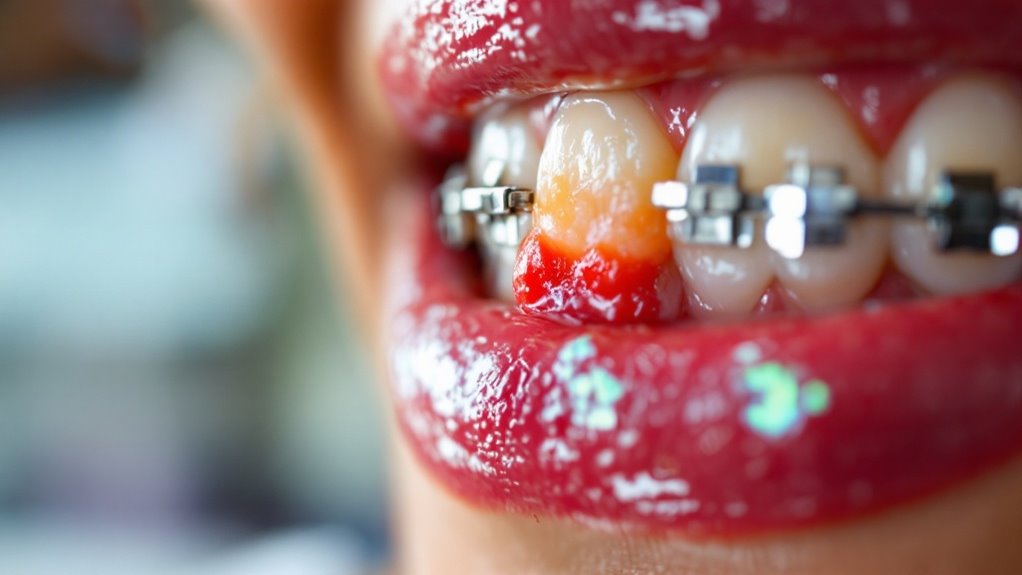
Although braces are essential for realigning teeth, they often lead to irritation of oral tissues due to their mechanical components. The following factors contribute to this discomfort:
- Bracket friction: Sharp edges of brackets chafe against soft tissues, causing inflammation triggers and oral sores. Avoiding gum irritation is crucial for managing discomfort.
- Wire irritation: Protruding wire ends can puncture delicate areas, resulting in tissue damage and adjustment pain. Pain from broken brackets or wires can exacerbate this issue, leading to increased discomfort.
- Recurrent trauma: Continuous movement during eating or speaking accelerates healing responses, making sores worse.
Incorporating protective measures like orthodontic wax can mitigate these issues, but understanding the causes of orthodontic discomfort is vital for effective management.
Common Triggers for Canker Sores
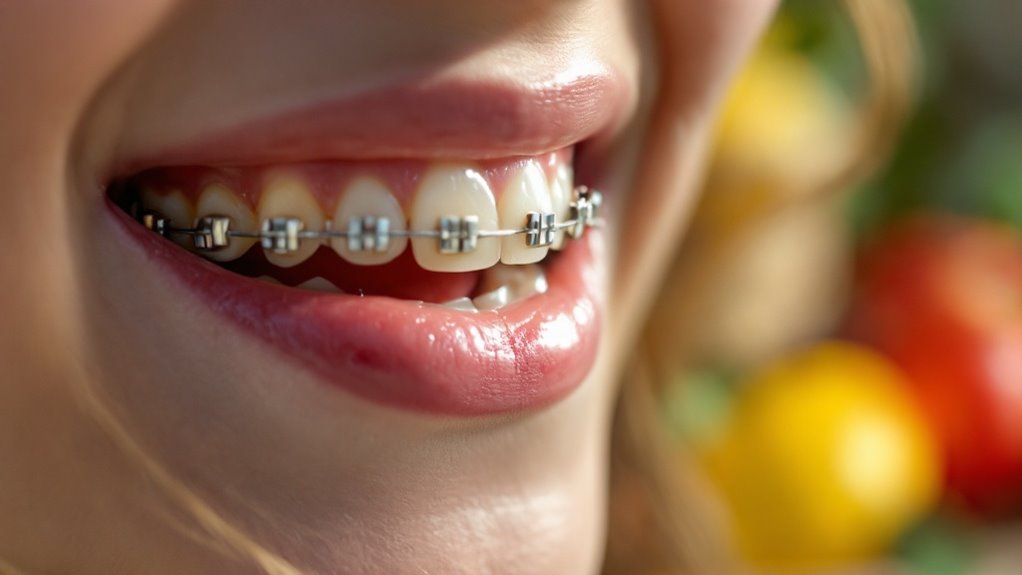
Canker sores can arise from various triggers that irritate the oral tissues, leading to discomfort and pain. Mechanical trauma from dental procedures, braces, or accidental bites can create an environment for sores to develop. Poor oral hygiene practices or aggressive brushing techniques may cause abrasions, while ill-fitting dental devices can lead to persistent friction. Additionally, the precise causes of canker sores remain unclear, suggesting that multiple factors may contribute to their development. Maintaining proper oral hygiene, such as using a fluoride-based toothpaste, and effective stress management can help reduce the frequency of these painful sores and promote overall oral health. Furthermore, using interdental brushes can help prevent irritation caused by food particles lodged between teeth, which may lead to canker sores. Dietary factors also play a role; consuming acidic or spicy foods, along with toothpaste containing sodium lauryl sulfate, can exacerbate irritation. It’s important to note that gum disease can also contribute to the development of canker sores due to the inflammation it causes in the mouth.
Identifying Prone Individuals
Identifying individuals prone to developing canker sores during orthodontic treatment is essential for effective management.
You should consider the following factors to enhance oral health awareness and recognize canker sore triggers:
- History of Canker Sores: If you’ve had recurring sores or a family history of mouth ulcers, you’re at higher risk.
- Oral Tissue Sensitivity: Thin oral tissues are more susceptible to irritation from braces, especially since canker sores are triggered by irritation in those already prone to them.
- Nutritional Factors: Deficiencies in vitamins like B12 or iron can increase your vulnerability to sores.
Prevention Strategies for Managing Canker Sores
To effectively manage canker sores during orthodontic treatment, implementing prevention strategies is essential. Here are some canker sore prevention tips to contemplate:
- Maintain excellent oral hygiene by brushing gently with a soft-bristled toothbrush.
- Rinse your mouth with a saline solution or an alcohol-free mouthwash regularly.
- Avoid acidic and sharp foods that may irritate your mouth, as these can be triggers for canker sore development.
- Use a straw for beverages, minimizing contact with braces.
- Contemplate soft foods to reduce trauma to oral tissues.
Treatment Methods for Canker Sores
When you’re dealing with canker sores, several treatment options can help alleviate discomfort and promote healing. Topical anesthetics, like lidocaine, provide immediate pain relief, while a saltwater rinse can reduce inflammation and cleanse the affected area. Additionally, making dietary modifications can further support your recovery by avoiding irritating foods. Canker sores typically resolve on their own within one to two weeks, so it’s important to manage symptoms while allowing time for healing.
Topical Anesthetic Options
Topical anesthetic options play a crucial role in alleviating the discomfort caused by canker sores, offering targeted relief to those affected.
Here are three effective choices for pain relief:
- Topical Numbing Agents: Use benzocaine or lidocaine gels for direct application, providing quick numbing effects.
- Coating Medications: Products like bismuth subsalicylate or milk of magnesia help protect the sore, reducing irritation.
- Film-Forming Products: Zilactin and Kank-A’s gel create a protective barrier, minimizing pain while promoting healing. Additionally, it is important to note that accurate diagnosis by a trained healthcare professional is essential before treatment if the sores persist.
These topical anesthetics are indispensable tools to manage the discomfort associated with canker sores effectively.
Saltwater Rinse Benefits
Managing canker sores often involves various treatment methods, including the use of saltwater rinses. This simple remedy can markedly enhance your oral hygiene and alleviate discomfort. Salt water is known for its natural healing properties, making it an effective choice for mouth sores.
| Benefits | Preparation | Usage Guidelines |
|---|---|---|
| Reduces bacteria | 1 tsp salt in ½ cup warm water | Swish for 30 seconds |
| Decreases inflammation | Dissolve completely | Repeat every few hours |
| Promotes healing | No additional ingredients | Spit out, don’t swallow |
| Natural disinfectant | ||
| Speeds up recovery |
Incorporating saltwater rinses can expedite healing and improve overall comfort.
Dietary Modifications for Relief
Dietary modifications play an essential role in alleviating the discomfort associated with canker sores.
Implementing specific dietary restrictions can help you find soothing options:
- Avoid acidic foods like citrus fruits and tomatoes to reduce irritation.
- Opt for soft, cold foods such as yogurt, oatmeal, and popsicles to ease pain.
- Puree meals to minimize chewing strain and enhance comfort.
The Role of Diet in Canker Sore Development
While various factors contribute to the development of canker sores, diet plays a significant role in their onset and frequency. Certain dietary triggers, like acidic foods (coffee, citrus, tomatoes) and spicy or salty items, can irritate your mouth, leading to sores.
Crunchy textures and sugary foods may also worsen the situation by promoting bacteria growth. Additionally, nutrient deficiencies in iron, B12, and folic acid can heighten susceptibility to canker sores.
To minimize risks, focus on a balanced diet, avoiding irritants while ensuring adequate nutrient intake to support oral health and reduce sore occurrences.
Adjusting to Orthodontic Treatment and Its Effects on Oral Health
Adjusting to orthodontic treatment can lead to initial discomfort and increased sensitivity in your mouth.
As your oral tissues adapt to braces, you might experience irritation that could heighten the risk of canker sores.
Implementing preventive care tips is essential to maintain ideal oral health during this change.
Initial Discomfort and Sensitivity
As you begin your orthodontic treatment, experiencing initial discomfort and sensitivity is common due to the metal brackets and wires of braces. This initial pain often leads to irritation in your mouth, making it essential to manage the sensitivity effectively. Here are three key points to take into account:
- Friction from braces can cause raw areas, increasing the risk of sores. Additionally, pain typically lasts for about a week after tightening.
- Individuals with thinner oral mucosa may experience heightened sensitivity.
- Stress and dietary choices can further exacerbate irritation. Additionally, maintaining oral hygiene is crucial to prevent further complications during treatment.
Oral Tissue Adaptation
Understanding how your oral tissues adapt during orthodontic treatment is fundamental for maintaining oral health and comfort.
Initially, during the adaptation phases, you may experience mucosal ulcers due to appliance friction or improper fitting. This discomfort can impact your compliance with treatment. Salivary flow may increase, aiding in natural buffering, but pH fluctuations can occur.
Over time, your periodontal ligaments and gingival tissues will adjust, supporting new tooth alignment. Bone remodeling is critical for stability, taking several months to fully stabilize. Additionally, improper adjustments can lead to bite problems that further complicate your dental health.
Proper management strategies, like topical gels, can help relieve discomfort during this essential adaptation process.
Preventive Care Tips
Maintaining ideal oral health during orthodontic treatment is essential for preventing complications, including canker sores.
Implementing preventive care measures can greatly enhance oral hygiene and comfort. Consider these tips:
- Enhanced Oral Hygiene: Use an electric toothbrush and interdental brushes to effectively clean around braces.
- Dietary Adjustments: Avoid sticky and hard foods that can irritate oral tissues and trap bacteria.
- Regular Monitoring: Schedule consistent dental check-ups to guarantee proper adjustments and address any issues promptly.
Frequently Asked Questions
Can Braces Worsen Pre-Existing Canker Sore Conditions?
Yes, braces can worsen your pre-existing canker sore conditions. The discomfort from braces may trigger increased friction and irritation, amplifying soreness and impeding healing, especially in sensitive areas where sores already exist.
How Long Do Canker Sores Typically Last With Braces?
Canker sore duration with braces typically lasts 7 to 14 days. You might experience discomfort during this time, but maintaining good oral hygiene and using orthodontic wax can help alleviate irritation and promote healing.
Are There Specific Braces Types That Minimize Canker Sore Risk?
While you might think all braces cause irritation, certain materials like ceramic and custom-fit designs reduce friction. Prioritizing good oral hygiene further minimizes discomfort, helping you serve others with a confident smile during treatment.
Can Canker Sores Affect the Effectiveness of Orthodontic Treatment?
Canker sores can hinder your orthodontic treatment effectiveness if not managed. Prioritize canker sore prevention and communicate with your orthodontist about necessary adjustments to minimize discomfort and maintain compliance throughout your treatment plan.
Is It Safe to Use Mouthwash With Braces to Prevent Canker Sores?
Using mouthwash with braces can be safe, especially those containing antiseptic ingredients like hydrogen peroxide. Prioritize maintaining oral hygiene to reduce bacteria and prevent canker sores. Consult your orthodontist for specific recommendations on suitable products.
Summarizing whether braces can cause canker sores
In the journey of orthodontic treatment, braces can sometimes feel like a double-edged sword, bringing both alignment and irritation.
While they can trigger canker sores by irritating your oral tissues, understanding their relationship helps you navigate this discomfort.
By implementing effective prevention strategies and treatment methods, you can keep your smile shining bright.
Remember, staying mindful of your diet and oral care can transform your experience, turning potential pain into a stepping stone toward a healthier, happier smile.


