
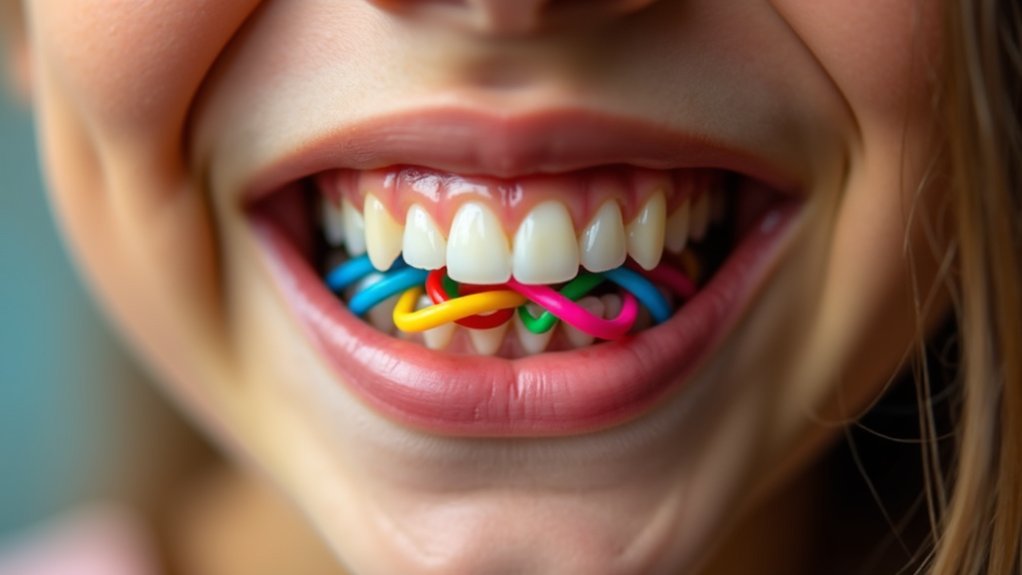
You shouldn’t brush your teeth with rubber bands in. Keeping them on can damage your teeth and impair thorough cleaning. To maintain good oral hygiene, remove rubber bands before brushing and flossing. This allows you to clean every surface of your teeth effectively. Remember to replace rubber bands after your oral care routine to guarantee ideal treatment progress. Want to know more about maintaining your rubber bands and enhancing your oral hygiene?
Key Takeaways
- No, you should remove rubber bands before brushing to ensure thorough cleaning and prevent damage.
- Proper oral hygiene prevents plaque buildup around rubber bands and reduces dental issues.
- Use a soft-bristled toothbrush and fluoride toothpaste for effective brushing.
- Floss daily and rinse your mouth after brushing to eliminate debris.
- Reapply rubber bands immediately after brushing to maintain pressure and effectiveness.
Importance of Proper Oral Hygiene With Rubber Bands
Maintaining proper oral hygiene while using rubber bands is vital for your dental health. Brushing and flossing daily prevents plaque buildup around rubber bands, reducing the risk of dental problems like cavities and gum disease. Proper brushing technique and gentle short strokes are essential to ensure that all areas around the rubber bands are cleaned effectively.
Using an electric toothbrush can enhance plaque removal around braces and rubber bands, ensuring a healthier mouth during your orthodontic treatment. Furthermore, electric toothbrushes are designed for ease of use, making it simpler to clean hard-to-reach areas effectively. You should remove rubber bands before brushing to guarantee a thorough clean, then apply new ones immediately afterward for effective orthodontic treatment. It’s important to change rubber bands 3-4 times a day to maximize their effectiveness in correcting bite and alignment issues.
Steps for Brushing Teeth Effectively
To brush your teeth effectively while using rubber bands, start by removing any interarch rubber bands. This prevents damage and guarantees thorough cleaning.
Use a soft-bristled toothbrush with fluoride toothpaste, such as Sensodyne Pronamel, and brush every surface of your teeth, paying special attention to areas around brackets and wires. Aim to brush for at least two minutes to effectively remove plaque and food particles, as proper oral hygiene is crucial for braces wearers. Remember, incorporating flossing at least once a day into your routine is essential for maintaining optimal oral health.
After brushing, replace your rubber bands immediately to maintain your orthodontist’s treatment plan. Finally, rinse your mouth with water or mouthwash to eliminate any remaining debris and freshen your breath, promoting ideal oral hygiene.
Recommendations for Flossing With Rubber Bands
Flossing with rubber bands in place can hinder your oral hygiene routine, making it essential to remove them before you start. This guarantees thorough cleaning and prevents any potential damage to the bands. Additionally, using a water flosser can reduce gum inflammation and enhance your cleaning routine, as they are effective at plaque removal and can reach areas traditional methods may miss.
To enhance your flossing effectiveness, consider the following recommendations:
- Use a floss threader to navigate around brackets easily.
- Floss thoroughly to remove food particles trapped between teeth.
- Reapply rubber bands immediately after flossing to maintain their effectiveness.
- Change rubber bands after each brushing session to avoid pain or discomfort and ensure ideal pressure.
Additionally, maintaining good oral hygiene can help prevent bleeding gums and other related issues.
Consult your orthodontist if you have any concerns regarding your flossing technique.
Common Mistakes to Avoid
While you might think that wearing rubber bands continuously will help your orthodontic treatment, several common mistakes can actually hinder your progress.
Always remove rubber bands before brushing to guarantee thorough cleaning and prevent damage. After brushing, don’t forget to replace them; failing to do so can prolong your treatment time.
Avoid reusing the same rubber bands; new ones maintain the necessary tension for effective treatment. Additionally, verify you properly place the bands back on the brackets to facilitate desired tooth movement.
Finally, develop a routine to consistently wear rubber bands to keep their effectiveness intact throughout your orthodontic care. It’s also important to seek a second opinion if you’re uncertain about your orthodontic treatment plan, as this can ensure that you’re on the right track.
Maintaining Your Rubber Bands During Oral Care
Maintaining your rubber bands during oral care is essential for the success of your orthodontic treatment. To guarantee peak results, follow these guidelines:
Maintaining your rubber bands is vital for your orthodontic success. Follow these guidelines for optimal results.
- Remove rubber bands before brushing and flossing to prevent damage.
- Replace rubber bands immediately after oral care to maintain consistent pressure.
- Change rubber bands every 12 hours, or ideally 3-4 times daily, for effectiveness.
- Carry extra rubber bands to promptly replace any broken or lost bands.
Proper placement of rubber bands is critical; incorrect positioning can hinder your treatment progress and alignment.
Stay diligent, and your efforts will lead to a healthier smile.


