
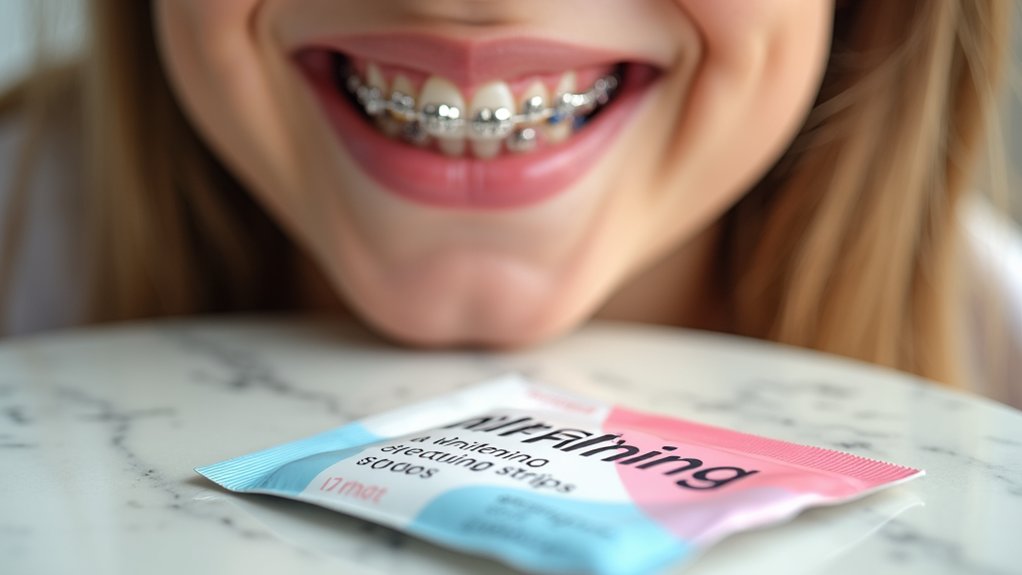
Using teeth whitening strips with braces isn’t recommended. The brackets can cause uneven whitening, leaving visible patches. Additionally, the whitening agents may irritate your gums and even lead to enamel damage. Instead, focus on maintaining good oral hygiene and consider safer alternatives, like whitening toothpaste or professional treatments post-braces. If you’re looking for effective ways to keep your smile bright during orthodontic treatment, there are more options available worth exploring.
Key Takeaways
- Whitening strips are not recommended for braces due to the risk of uneven whitening around brackets.
- Brackets can cover parts of teeth, leading to discolored areas once braces are removed.
- The peroxide in whitening strips may cause metal brackets to oxidize, resulting in discoloration.
- Strips may not adhere well to braces, increasing the risk of gum irritation and dental issues.
- Professional whitening treatments are safer and more effective after braces removal for uniform results.
Understanding Teeth Whitening Strips
When you’re looking to enhance your smile, understanding teeth whitening strips is vital. These at-home products contain a peroxide-based whitening gel that effectively tackles tooth discoloration. Typically, you apply them for 30 minutes to an hour.
However, if you wear braces, be cautious: brackets can obstruct the gel, leading to uneven whitening. While whitening strips can be safe with clear aligners or lingual braces, it’s important to consult your orthodontist beforehand. Using whitening strips during treatment can risk uneven whitening due to exposure of different surface areas. Additionally, excessive exposure to whitening agents can lead to gum irritation, which is something to consider during your treatment. It’s also important to remember that veneers maintain their color over time, while natural teeth may darken.
This guarantees you achieve the best results while minimizing risks. Remember, effective use can make a significant difference in your smile’s brightness and overall confidence.
Why Whitening Strips Are Not Recommended for Braces
Using whitening strips while you have braces can lead to uneven whitening. The brackets and wires cover parts of your teeth, preventing the whitening gel from reaching those areas. As a result, you may end up with mismatched colors once your braces are removed. Additionally, using activated charcoal for whitening can pose risks, such as causing dark spots on teeth where braces were attached. It’s important to consult with your dentist about professional treatments that can be more effective and safer during orthodontic work. Maintaining a consistent oral hygiene routine is essential to prevent discoloration while wearing braces.
Uneven Whitening Risk
While teeth whitening can enhance your smile, it’s important to understand that whitening strips aren’t suitable for individuals with braces.
The brackets of traditional metal braces cover parts of your teeth, leading to uneven color once they’re removed. Since whitening strips only reach exposed areas, you risk a patchy appearance due to discolored sections beneath the brackets. Additionally, using whitening products while wearing braces can harm your enamel, which is why fluoride toothpaste is recommended for braces wearers. This is particularly crucial because pain relief from braces adjustments can be impacted by weakened enamel.
Studies show that using these strips can create significant color discrepancies, complicating your results. To achieve a uniform smile, consider professional teeth whitening treatments after your braces come off, ensuring full access to all tooth surfaces for the best results. Additionally, improper use of whitening products can pose health risks, making it crucial to seek professional advice.
Bracket Coverage Issues
Since whitening strips only contact the exposed surfaces of your teeth, they aren’t suitable for anyone with braces. The metal brackets cover significant areas, leading to uneven whitening once your braces are removed. Here’s a visual representation of the issue:
| Aspect | Impact |
|---|---|
| Exposed Tooth Surfaces | Only whitened areas |
| Bracket Coverage | Unbleached sections |
| Metal Brackets | Possible oxidation and discoloration |
| Whitening Treatment Timing | Best after braces removal |
To achieve a uniform color, it’s best to wait until your braces are off before pursuing any whitening treatment. Additionally, maintaining optimal oral health with electric toothbrushes for braces can help reduce plaque buildup and improve overall dental appearance during orthodontic treatment.
Risks of Using Whitening Strips With Braces
Many people may not realize that using whitening strips with braces can pose significant risks to your dental health.
The brackets on your braces can lead to uneven whitening, leaving lighter patches on your teeth once they’re removed. Additionally, the metal in braces might oxidize when exposed to whitening agents, causing potential discoloration.
Strips may not adhere properly to lingual or traditional braces, resulting in gum irritation. To avoid these risks, it’s essential to consult your orthodontist before attempting any whitening treatment.
They can provide tailored advice based on your individual dental condition and help guarantee your smile stays healthy.
Alternative Whitening Options for Braces
If you’re wearing braces and concerned about tooth discoloration, there are several effective whitening alternatives to evaluate.
Here are three options to regard:
- Whitening Toothpaste: Incorporate whitening toothpaste into your oral hygiene routine to help remove surface stains and prevent tooth discoloration without risking uneven results.
- Professional In-Office Whitening Treatments: For those with lingual braces or clear aligners, these treatments utilize stronger bleaching agents for effective whitening during your orthodontic journey.
- Custom Whitening Trays: After braces removal, your dentist can create custom trays for an even teeth whitening treatment tailored to your needs.
Oral Hygiene Practices to Prevent Discoloration
To keep your teeth bright while wearing braces, it’s essential to adopt effective brushing techniques and make thoughtful dietary choices.
Regularly brushing your teeth after meals helps eliminate food particles and plaque that can cause discoloration.
Additionally, reducing your intake of staining foods and beverages can further protect your smile throughout your orthodontic treatment.
Regular Brushing Techniques
Maintaining proper oral hygiene is essential, especially for those with braces, as it directly impacts the appearance of your teeth.
To guarantee your smile stays clear and bright, follow these brushing techniques:
- Brush your teeth twice daily for at least two minutes, focusing on brackets, wires, and between teeth to reduce plaque build-up.
- Use fluoride toothpaste to strengthen enamel and prevent tooth discoloration while wearing braces.
- Incorporate daily flossing or interdental cleaners to reach areas your toothbrush might miss, enhancing your general oral health and reducing staining.
These practices will help you effectively use whitening products when your braces come off.
Dietary Adjustments for Whitening
While wearing braces, making dietary adjustments can play a crucial role in preventing tooth discoloration.
To help prevent staining, limit consumption of staining foods and beverages like coffee, tea, and red wine. When you do indulge, using a straw can minimize contact with your teeth, protecting against extrinsic stains.
Additionally, incorporate fluoride treatments before and during your orthodontic treatment to strengthen enamel and combat discoloration.
Finally, schedule regular dental cleanings at least twice a year to remove plaque buildup and surface stains, ensuring a healthier, whiter smile throughout your braces journey.
Focus on these adjustments for effective whitening your teeth.
Professional Whitening Treatments After Braces
Once you’ve had your braces removed, it’s essential to evaluate professional whitening treatments to enhance your new smile.
Consider these options:
- In-office whitening: This method uses stronger bleaching agents and can lighten your teeth several shades in just one session.
- Custom bleaching trays: Dentists create these trays for even coverage, ensuring ideal results tailored to your teeth.
- Timing: Scheduling treatments shortly after braces removal allows for thorough treatment, accessing all tooth surfaces.
Investing in professional whitening treatments can greatly elevate your smile, making the most of your new alignment and boosting your confidence.
Tips for Maintaining White Teeth During Orthodontic Treatment
To keep your teeth looking bright during orthodontic treatment, consistent oral hygiene practices are crucial. Regular brushing and flossing after meals help remove food debris and prevent staining around braces.
Limit staining foods and beverages like coffee, tea, and red wine, as they can discolor your teeth while wearing braces. Utilizing whitening toothpaste can aid in maintaining a brighter smile without the risks of whitening strips.
Don’t forget to consult your orthodontist for tailored oral hygiene recommendations. Finally, schedule professional dental cleanings at least twice a year to guarantee plaque removal and keep your teeth white throughout your orthodontic treatment.


